Schedule a meeting now! Get advice from our admission expert Katharina. Request a spot in our meeting hub and we will call you back!
Refer a friend - Save 100€! Refer a friend, enroll together for this summer school, and save both 100 Euro! Refer a friend!
Study in Bali ! See our latest Sport Short Courses Programs
Interview with Cora, a Law student from Cardiff University
What Is It Like to Study Sport, Wellness & Environment in Bali?
4-5 minutes reading
Cardiff University law student Cora, joined the Sport & Environment program looking for something completely different from her usual academic routine. Four weeks later, that decision had taken her from lecture rooms to coral reefs, waterfalls, surf breaks, mangroves, and some unexpectedly personal lessons about confidence and trying unfamiliar things.

Cora receives her certificate of participation from Professor Astarini, Vice Director of Udayana University’s Postgraduate Program, during the Sport & Environment Summer Course closing ceremony in Bali.
Choosing Something Completely Different
Studying law usually means working within a highly structured academic environment built around reading, interpretation, argument, and written analysis. For Cardiff University student Cora, that was precisely why the Sport & Environment program in Bali caught her attention.
The course was far removed from her usual field of study. She had initially considered joining an Intercultural Communication program, which would have been closer to the subjects normally promoted to students in her discipline. Instead, she deliberately chose Sport & Environment because she wanted to spend part of her summer learning in a completely different way. In her interview, she described law as strict and heavily based around textbooks and said she wanted, for once, to step outside that routine and try something new.
That choice became significant because the Sport & Environment program itself is designed around a different kind of academic rhythm. The four-week course combines approximately 150 hours of lectures, workshops, sporting activities, field lectures, reflection, and independent project work, carrying 6 ECTS. Its academic components bring together sport and movement, environmental sustainability, Balinese culture and wellness, Bahasa Indonesia, and an individual student project. For a student accustomed to legal texts and classroom discussion, it created an opportunity to experience what learning can look like when movement, environment, culture, and direct observation become part of the academic process.
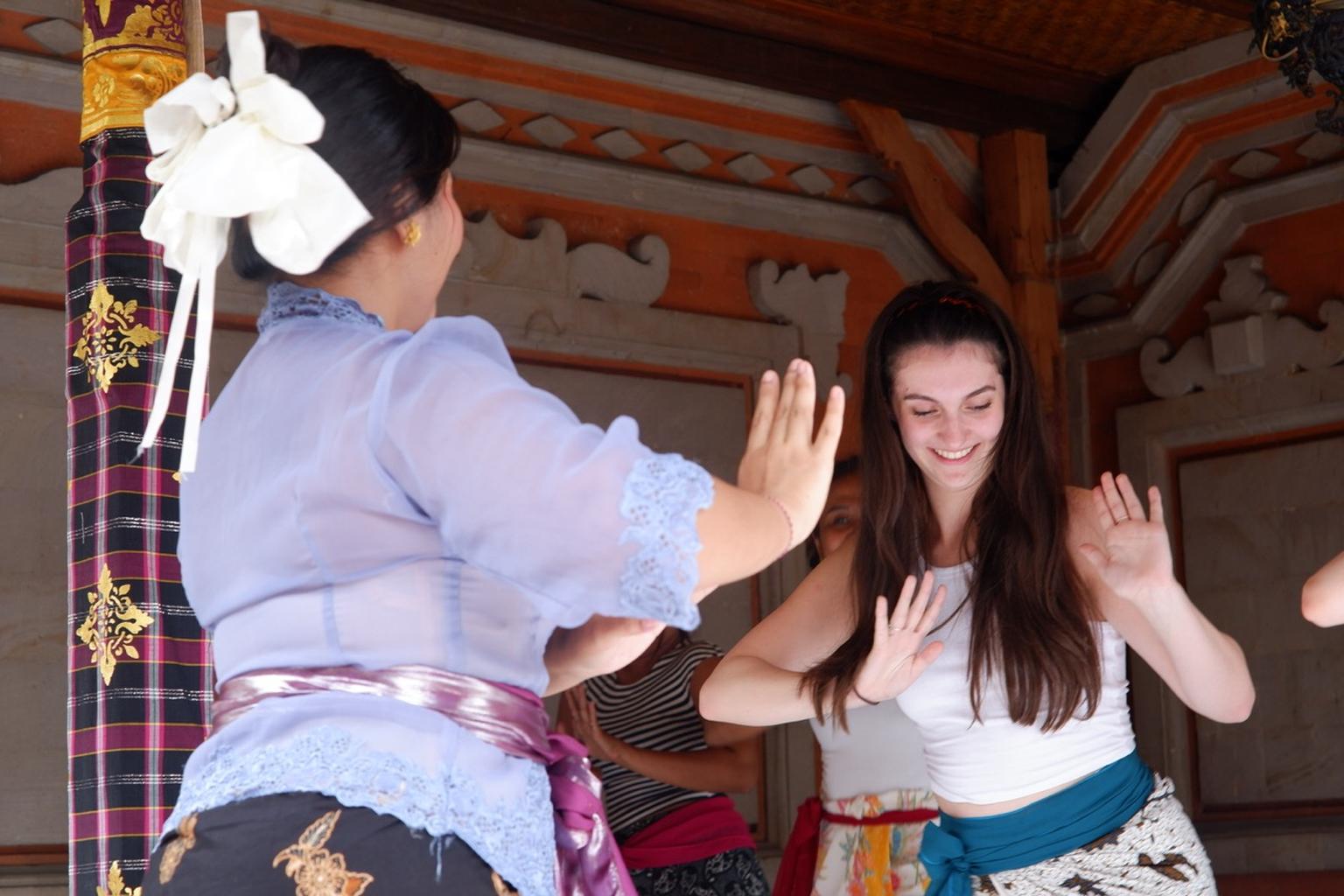
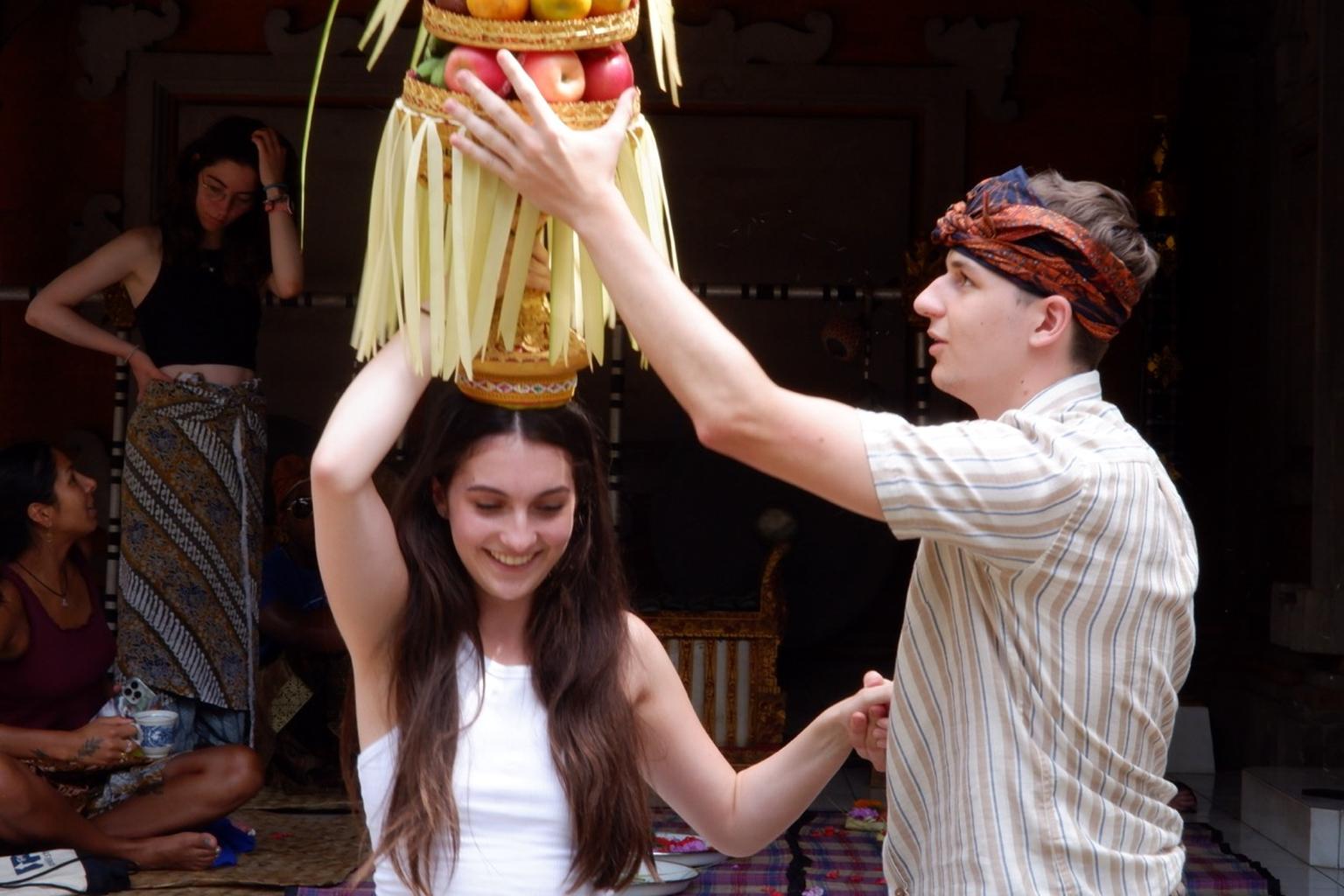
Cora practices a traditional Balinese dance stance, exploring how cultural movement connects with balance, posture, and body awareness during the Sport & Environment Summer Course.
Learning Through Movement
A typical university day still began conventionally enough. Students travelled to campus in Denpasar, attended morning lectures, stopped for lunch, and continued with afternoon sessions. The difference was that many of the subjects introduced in class were later experienced physically in the field.
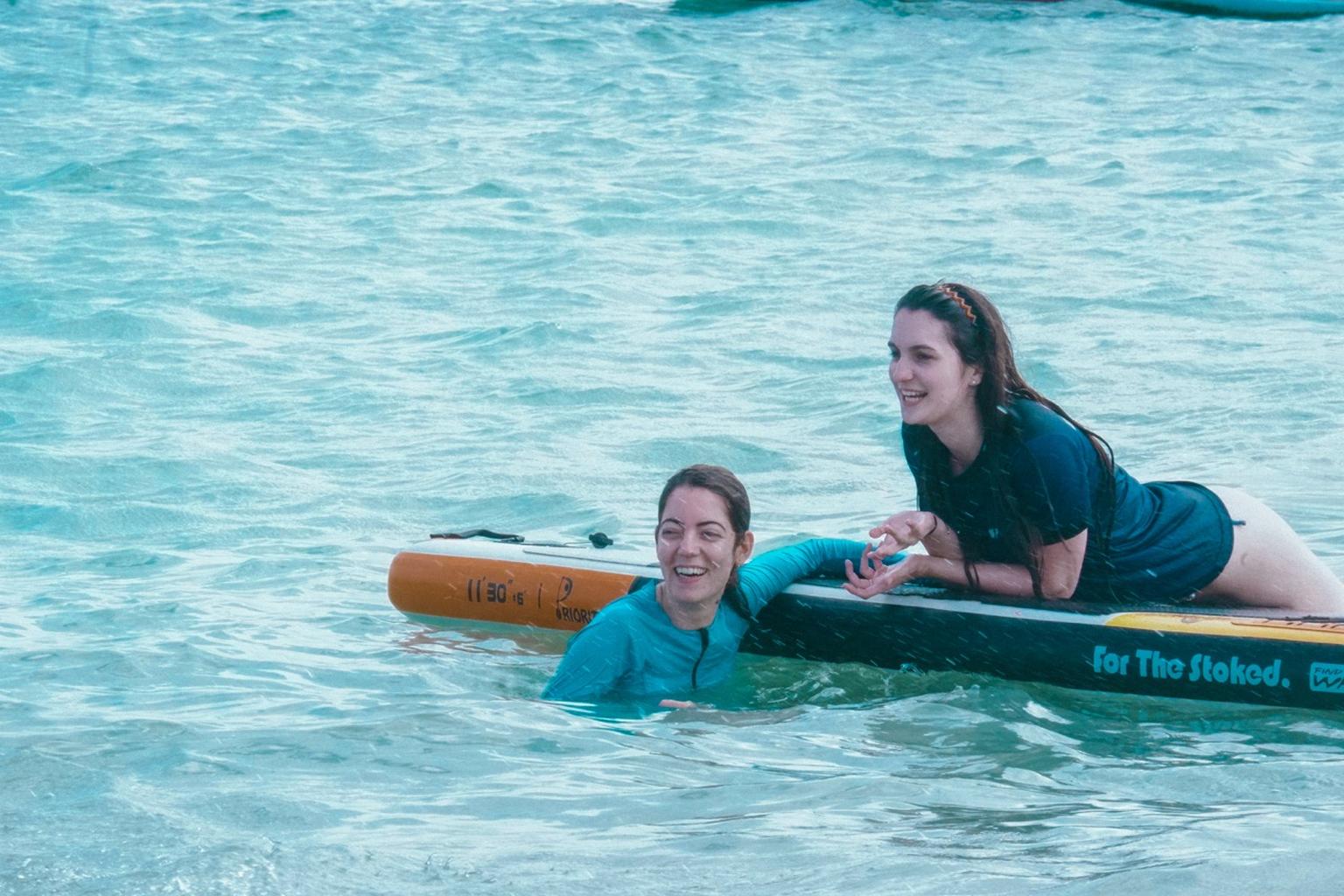
Cora recalled lectures on sport, movement, environmental topics, and Bahasa Indonesia, but some of her strongest memories came from the days when the timetable moved outside. A lecture on mangroves was followed by the opportunity to visit the ecosystem itself. Sport became something practiced rather than simply discussed. Surfing sessions began early in the morning, while water safety and lifeguarding introduced practical knowledge around responding to emergencies in aquatic environments.
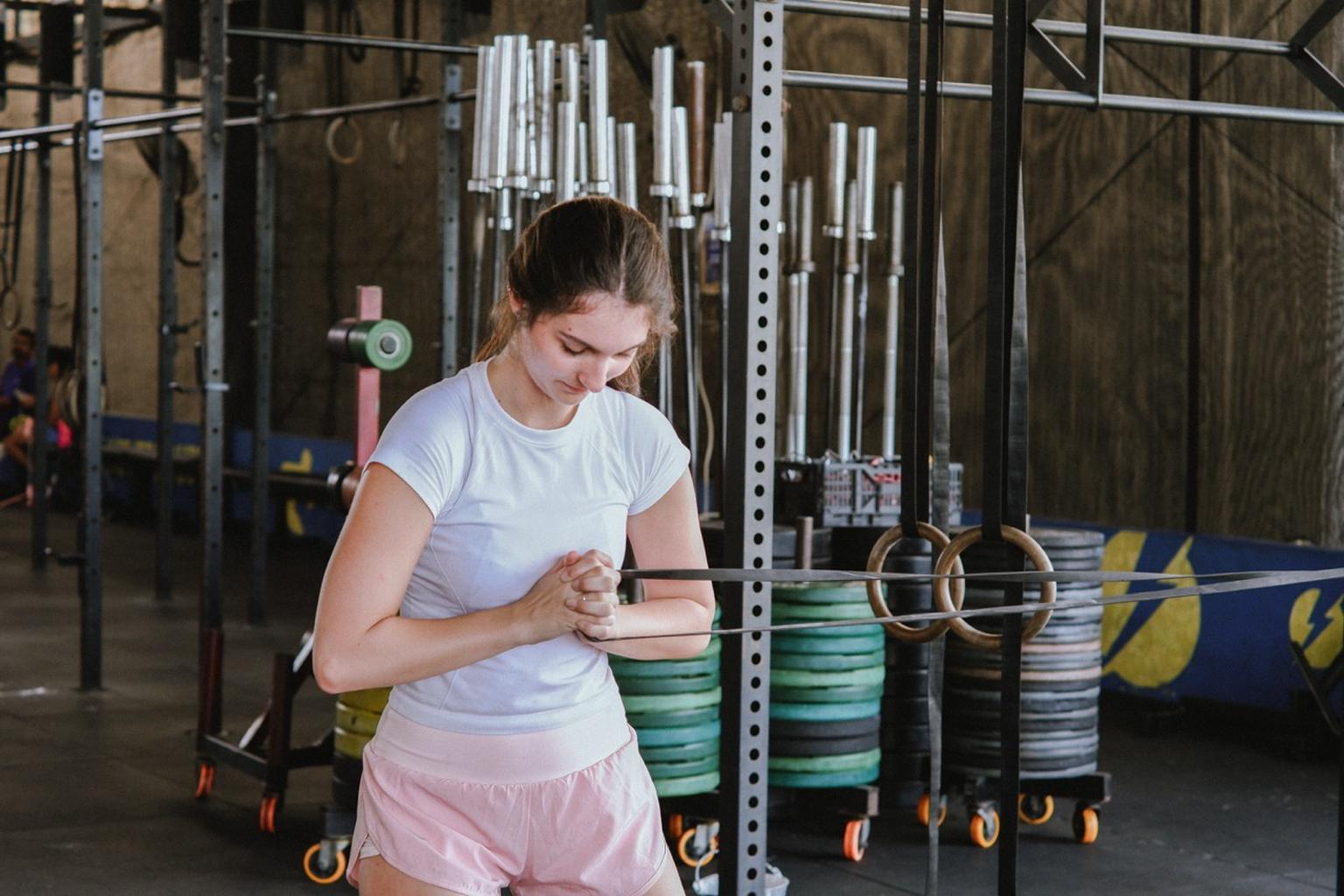
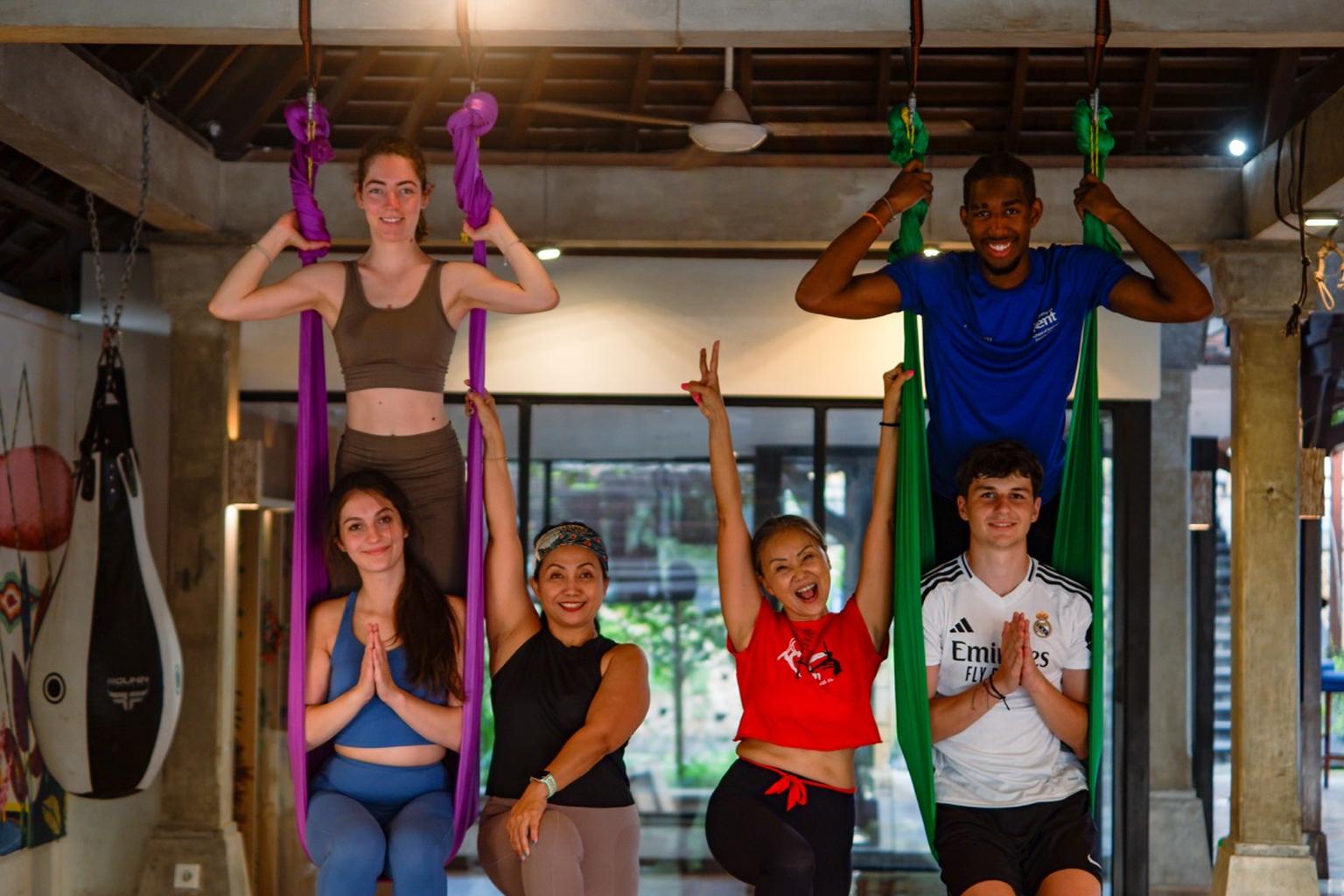
This reflects the broader academic structure of the program, where students encounter activities ranging from surfing, stand-up paddleboarding, yoga, MMA, physiotherapy, and lifeguard training to coral conservation, mangrove ecosystems, Subak, sustainable agriculture, and environmental fieldwork.
For Cora, the physical component was particularly meaningful because she did not arrive feeling naturally comfortable with every activity. Water, unfamiliar food, and new situations initially made her nervous. By the end of the course, however, she was already talking about wanting to continue surfing when she returned home. The change did not come from being pushed toward competition or performance. It came from repeatedly encountering unfamiliar situations within an environment where students were encouraged to participate, learn, and try again.

Cora and fellow summer course participants with the Biorock team in Pemuteran, North Bali, after a discovery scuba dive to observe underwater coral gardens and learn about local coral reef restoration efforts.
From Coral Reefs to Waterfalls
Among the program's field experiences, several remained particularly memorable for Cora.
A weekend in Pemuteran in North Bali combined marine education with coral reef conservation and scuba diving. Despite feeling unwell at the time, she still described the experience as one of the highlights of her four weeks. The program's environmental curriculum uses visits such as these to examine how marine and coastal conservation, sustainable tourism, and environmental responsibility are being approached within Bali.
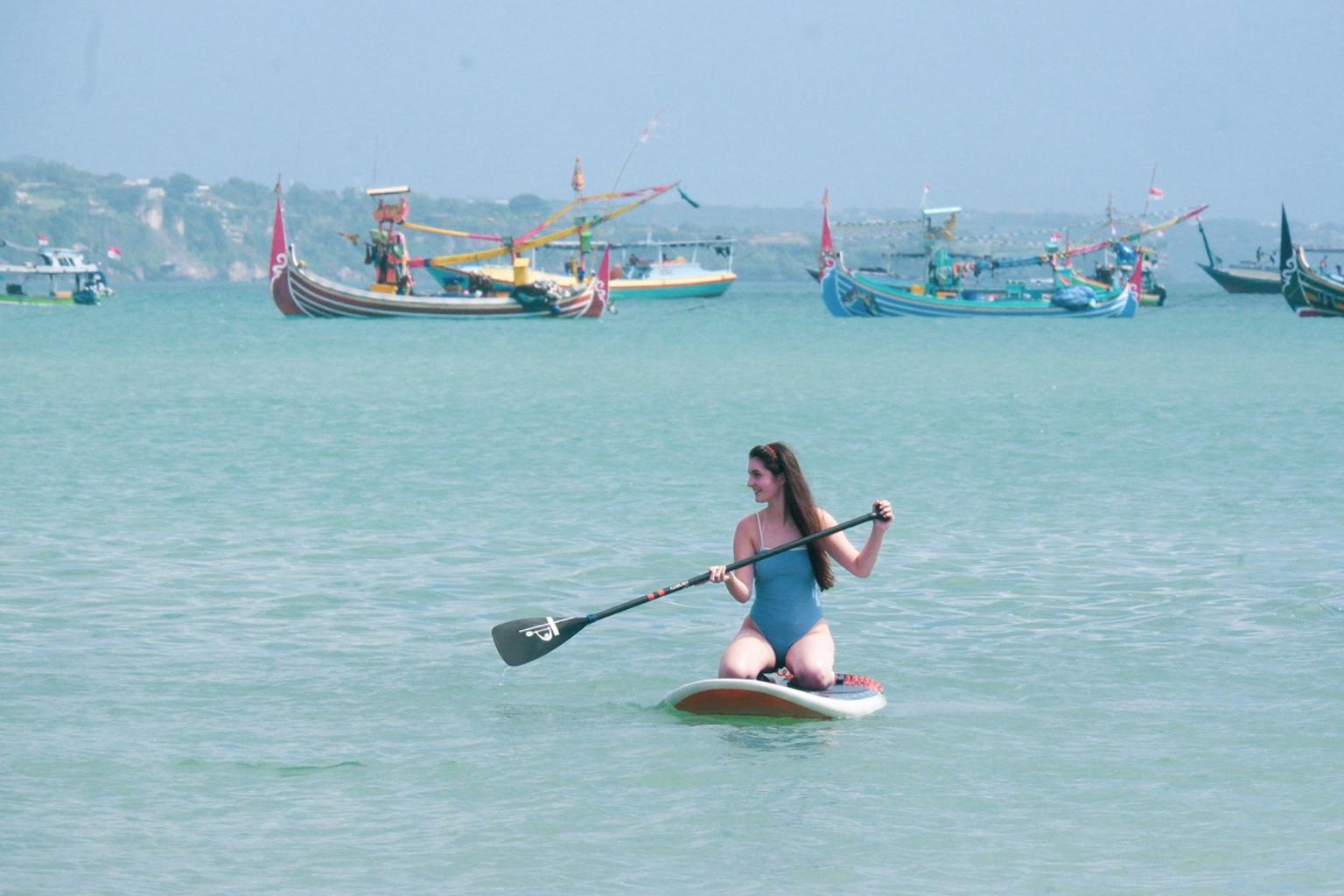
Another highlight took the students north to Lemukih, where trekking through the village landscape eventually led to waterfalls and natural swimming areas. What began as a physically demanding day also became an opportunity to experience a different part of Bali, far removed from the environments international students often encounter first.
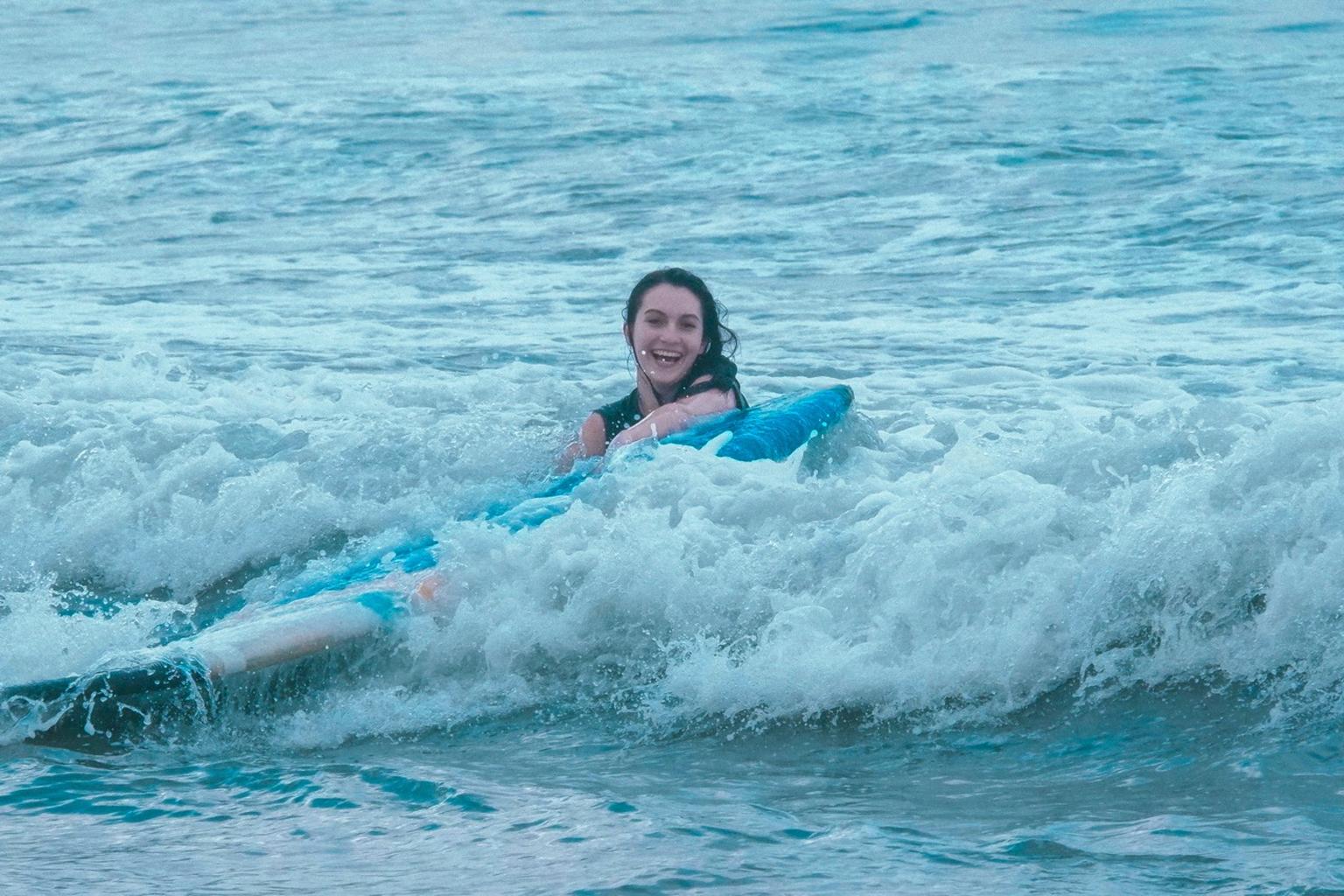
Surfing completed her personal top three. The sessions began early, when conditions were suitable, and the experience became memorable partly because of the support she received while learning. She did not describe herself as particularly skilled, but that was precisely the point. The program provided the space to participate without needing to arrive as an experienced athlete.
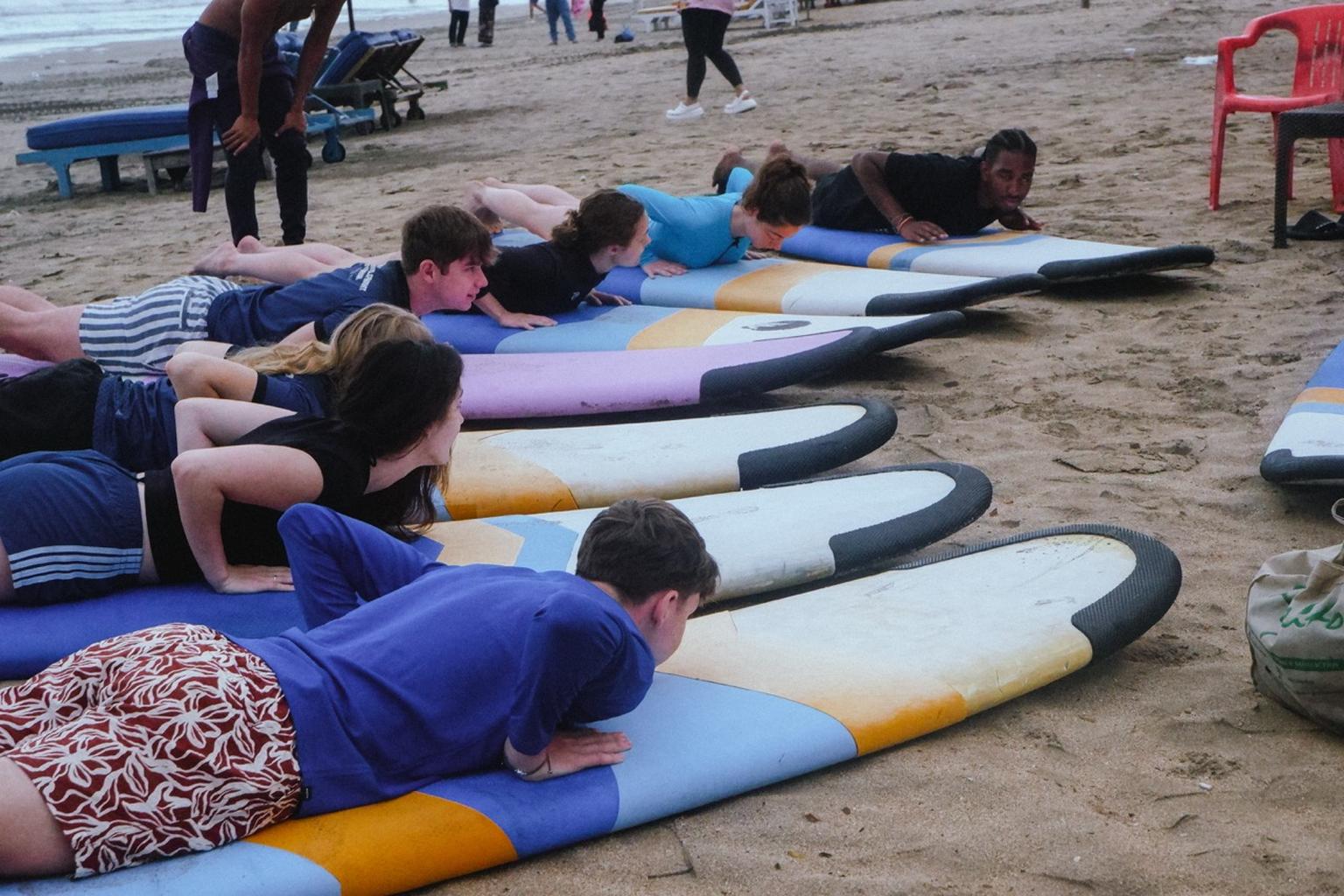
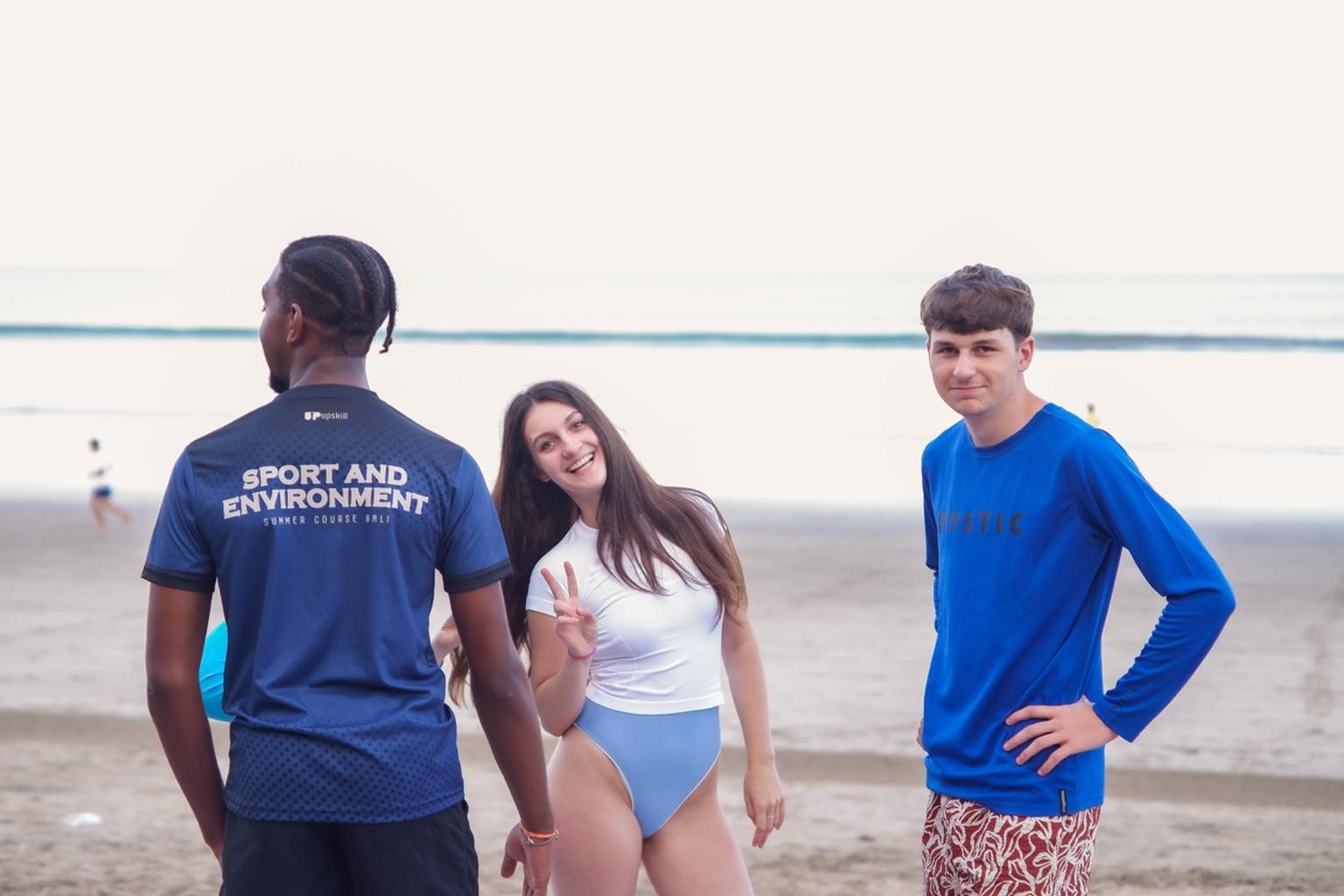
Surf before School! Students receive an early morning introduction to surfing at Kuta Beach, learning the basics of surf techniques and ocean safety before taking to the waves at 6 a.m.
Cora's experience raises a broader question about international education. Does every study abroad course need to correspond directly with a student's degree?
Her four weeks suggest otherwise.
A law student will not necessarily return home needing to become an environmental scientist, surfer, or marine conservation specialist. The academic value can instead lie in temporarily learning through a completely different lens. Sport requires awareness of the body, recovery, risk, and movement. Environmental fieldwork asks students to observe ecological systems and understand how communities respond to them. Cultural learning requires patience, curiosity, and an openness to perspectives that may not fit familiar academic frameworks.
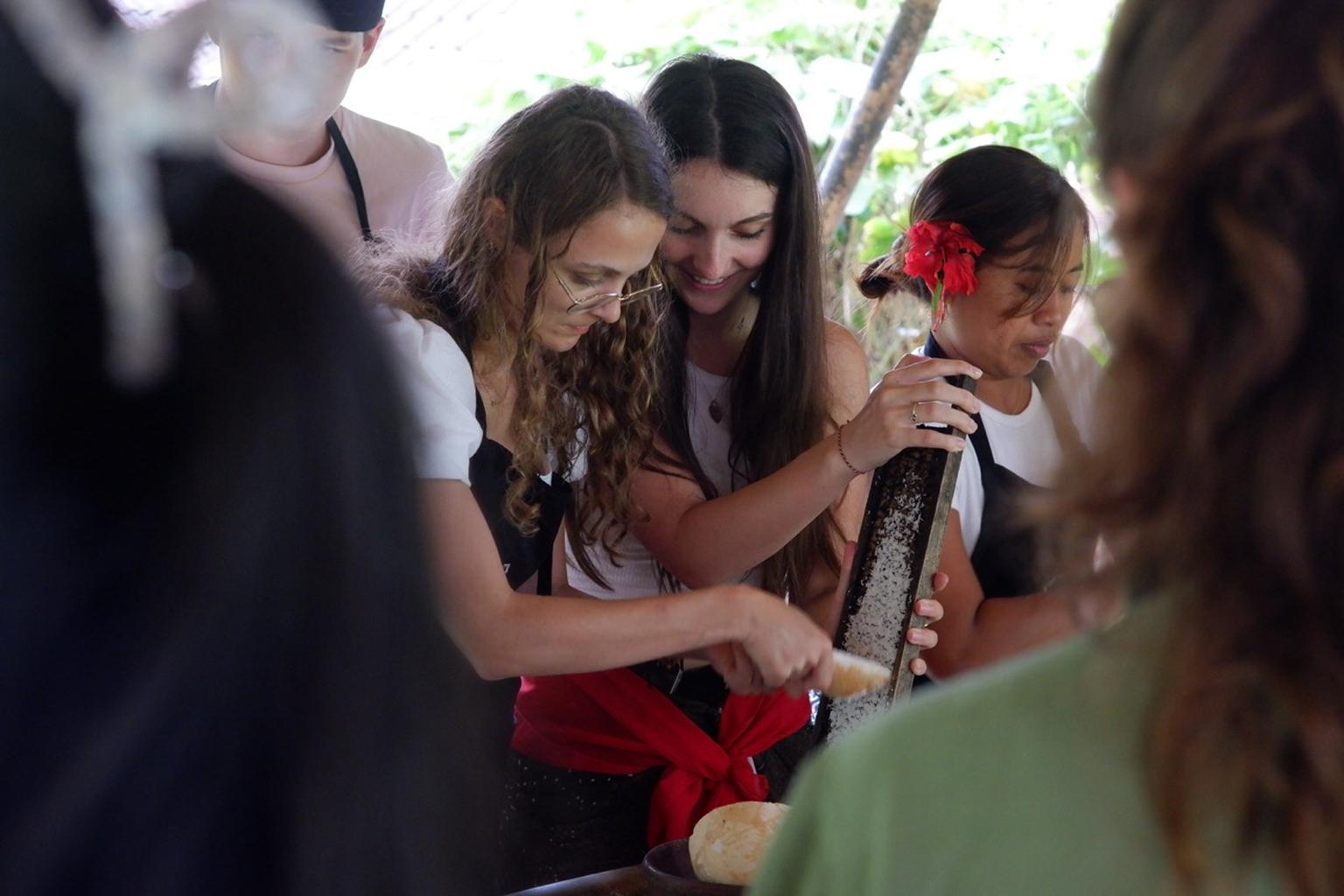
The Sport & Environment curriculum was intentionally designed around these intersections. Students examine environmental sustainability alongside physical activity, community health, traditional Balinese approaches to wellness, intercultural communication, and reflective research.
For Cora, that meant returning repeatedly to situations she would previously have avoided. She described herself before Bali as being frightened by many things, particularly unfamiliar food and being in the water. During the course, those concerns did not simply disappear overnight. Instead, she accumulated experiences that gradually made them feel manageable. That may be one of the more valuable outcomes of studying something outside one's academic discipline. The objective is not always to become an expert in a new subject. Sometimes it is to discover a different way of learning and, in doing so, understand something new about your own capacity to adapt.
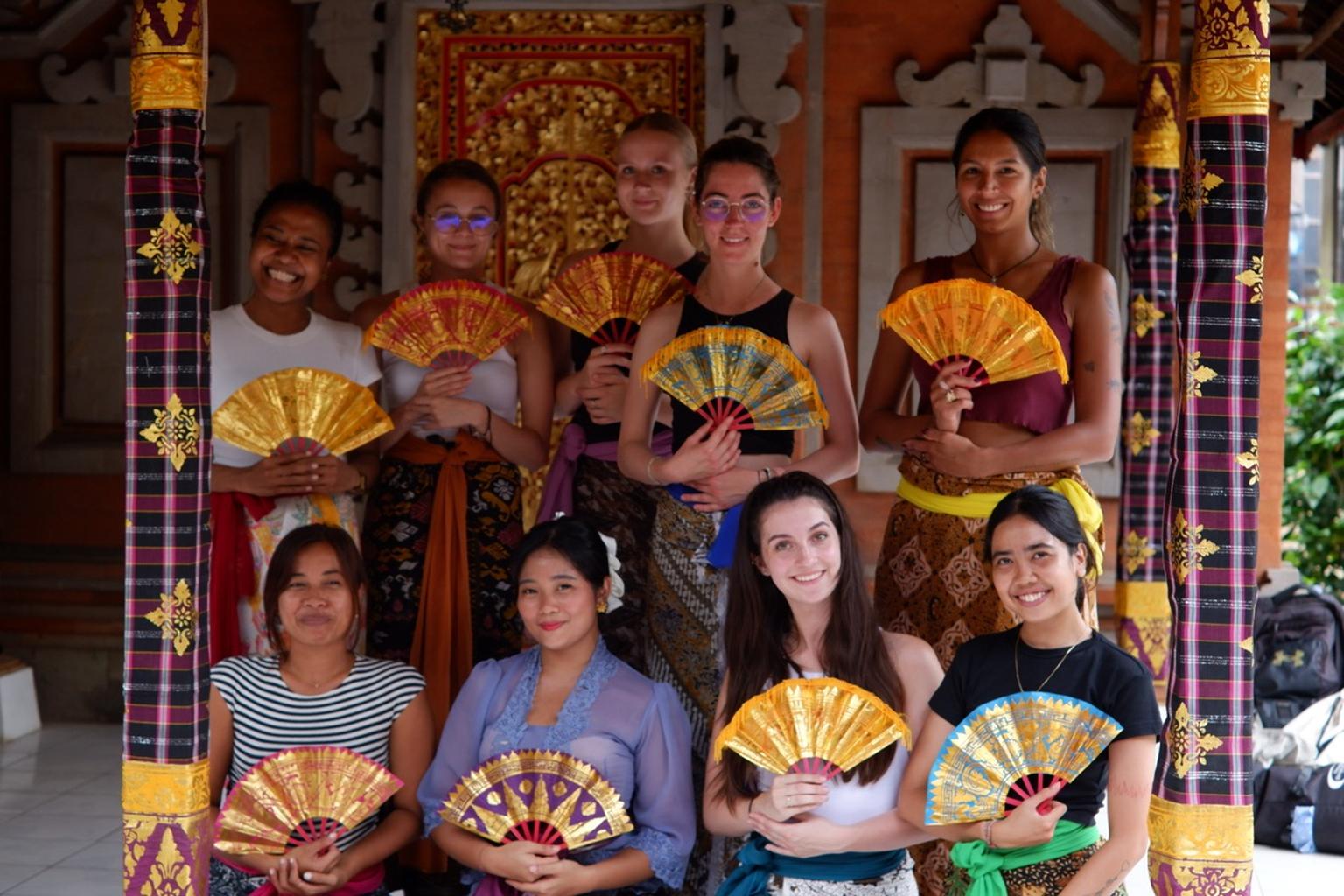
Students and upskill team with Balinese dance instructor Miss Ratih after practicing traditional fan dance movements and exploring their connections to biomechanics, balance, strength, and wellness.
When Cora reflected on the experience, friendship, openness, and trying things she had never previously attempted appeared repeatedly in her answers. She spoke positively about the people she met, the support she received, and how quickly a group of students living and studying together developed close relationships.
Her story also demonstrates why a program such as Sport & Environment does not need to belong exclusively to students already studying sport, health, or environmental science. For some participants, the most valuable reason to join may be exactly the opposite.
Sometimes studying abroad offers the rare opportunity to leave your normal academic identity behind for a few weeks, enter another discipline, and discover what becomes possible when learning no longer looks quite so familiar.

By upskill team