Interview with Emma, an Economic student from IST Germany
Sport, Culture and Environment: What Studying in Bali Added to a Sport Management Degree
3-4 minutes reading
For a Sport & Business Management student from Germany, studying in Bali did not mean leaving her subject behind. Instead, it expanded what sport could mean by connecting movement with environment, culture, community, wellness, and everyday life.
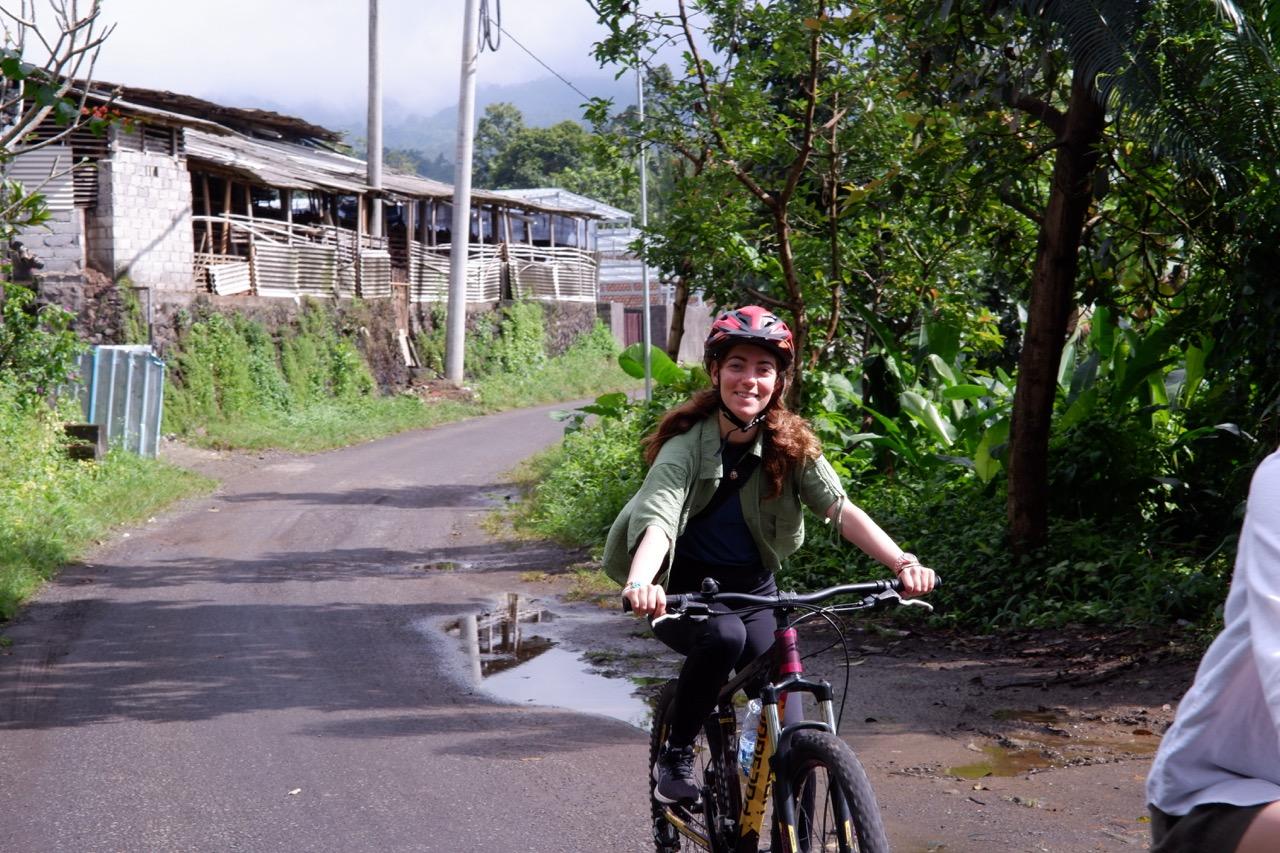
Emma enjoys a sunny cycling adventure through the rice terraces of Jatiluwih Village, experiencing Bali’s agricultural landscape and the relationship between outdoor recreation, nature, and traditional rural life.
Emma arrived in Bali with an academic background already closely connected to the subject she would be studying. At IST in Germany, her degree in Sport & Business Management focuses strongly on the organizational and management dimensions of sport.
The Sport & Environment program at Udayana University approached the subject from another direction. During her interview, Emma shared that studying sport in Bali introduced her to areas that were less central to her university experience in Germany, particularly the human body, health, philosophy, cultural traditions, nature, and the relationship between physical and spiritual well-being. She described wanting to take these different perspectives home and bring them together with what she had already learned about sport and business.
This interdisciplinary approach lies at the center of the course. Across four weeks, students examine the relationship between sport, environmental sustainability, community health, cultural knowledge, and personal well-being through academic sessions and direct field experience.
Sport is therefore not treated only as performance, competition, or industry. It becomes a way of examining how people move through environments, how bodies respond to physical challenges, how communities preserve traditional knowledge, and how recreational activities can interact responsibly with natural landscapes.
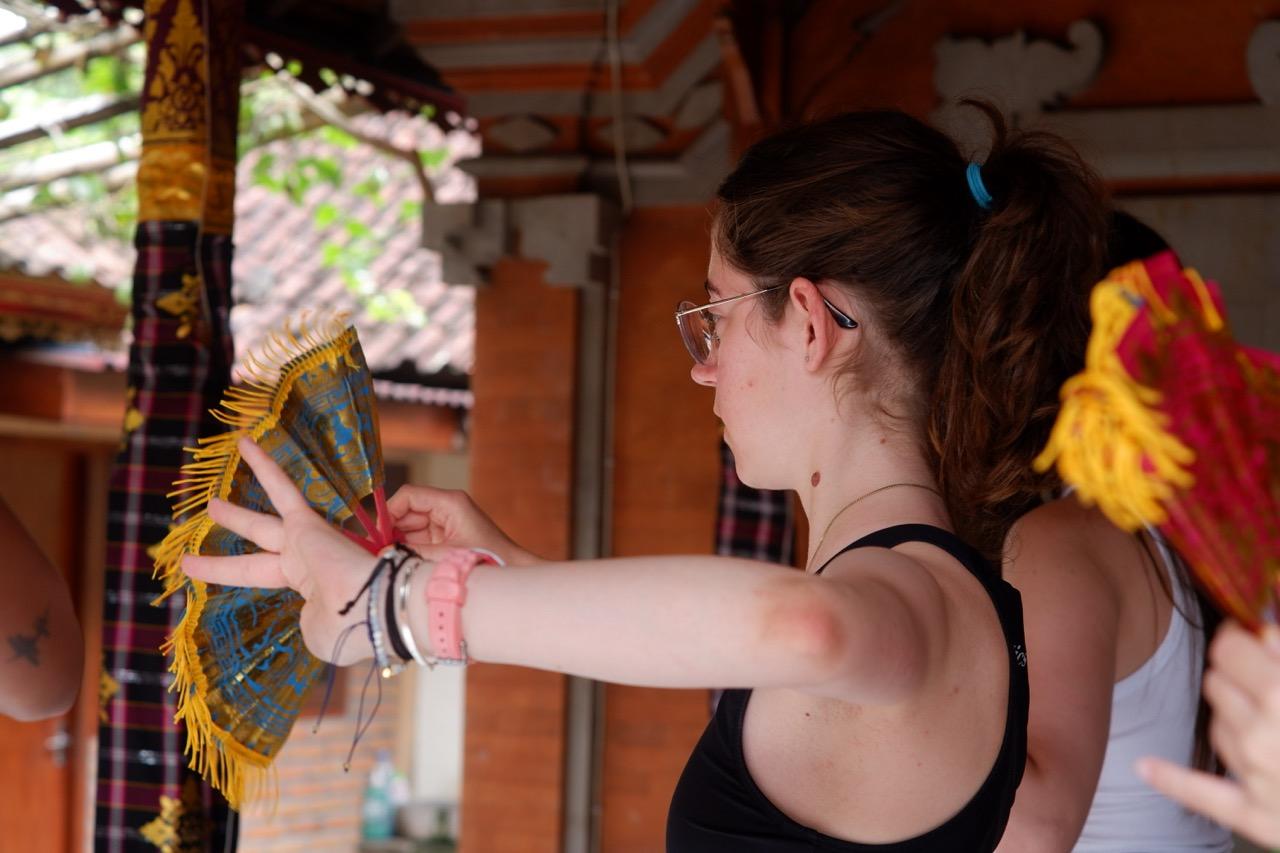
Emma practices a traditional Balinese dance stance as part of the Sport, Stability & Tradition module, exploring how cultural movement connects with biomechanics, posture, balance, and muscular strength.
From Biomechanics to Balinese Movement
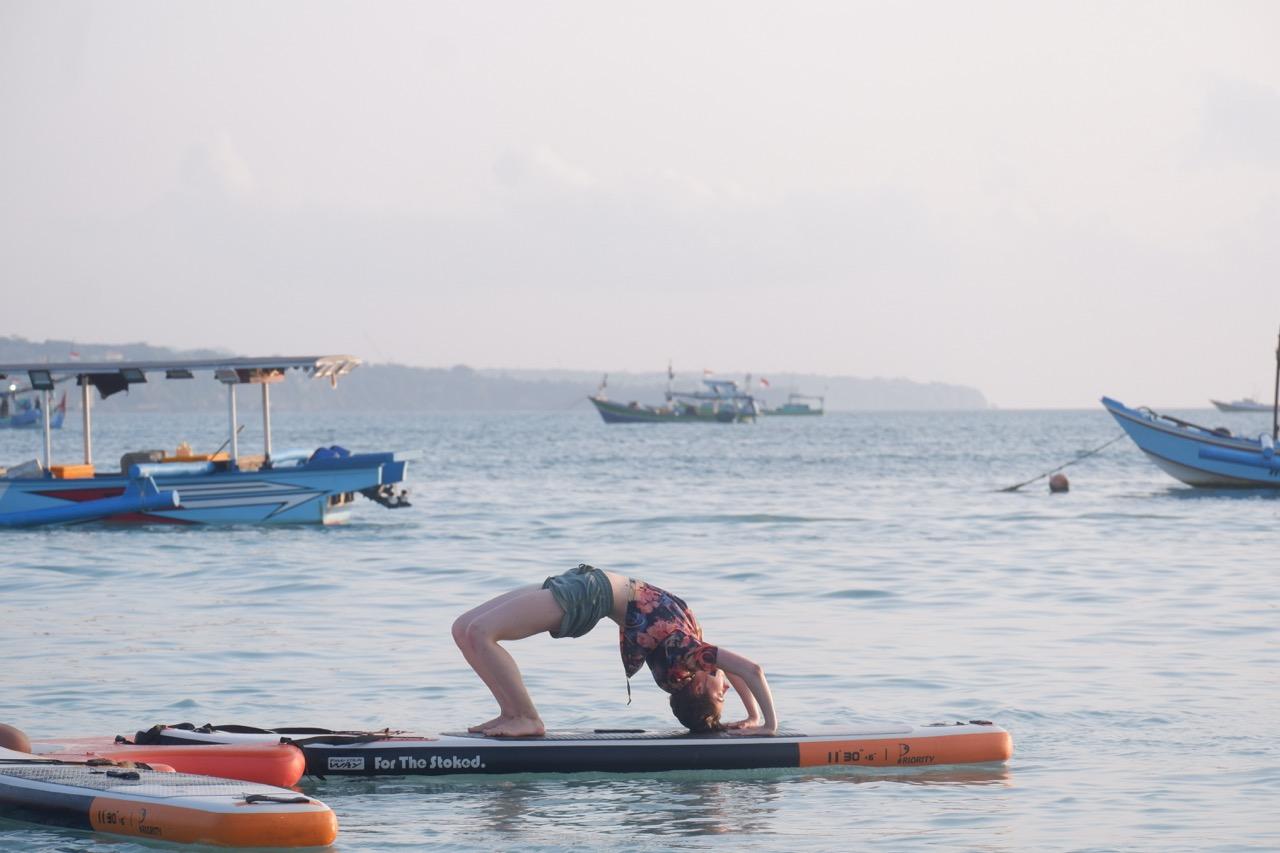
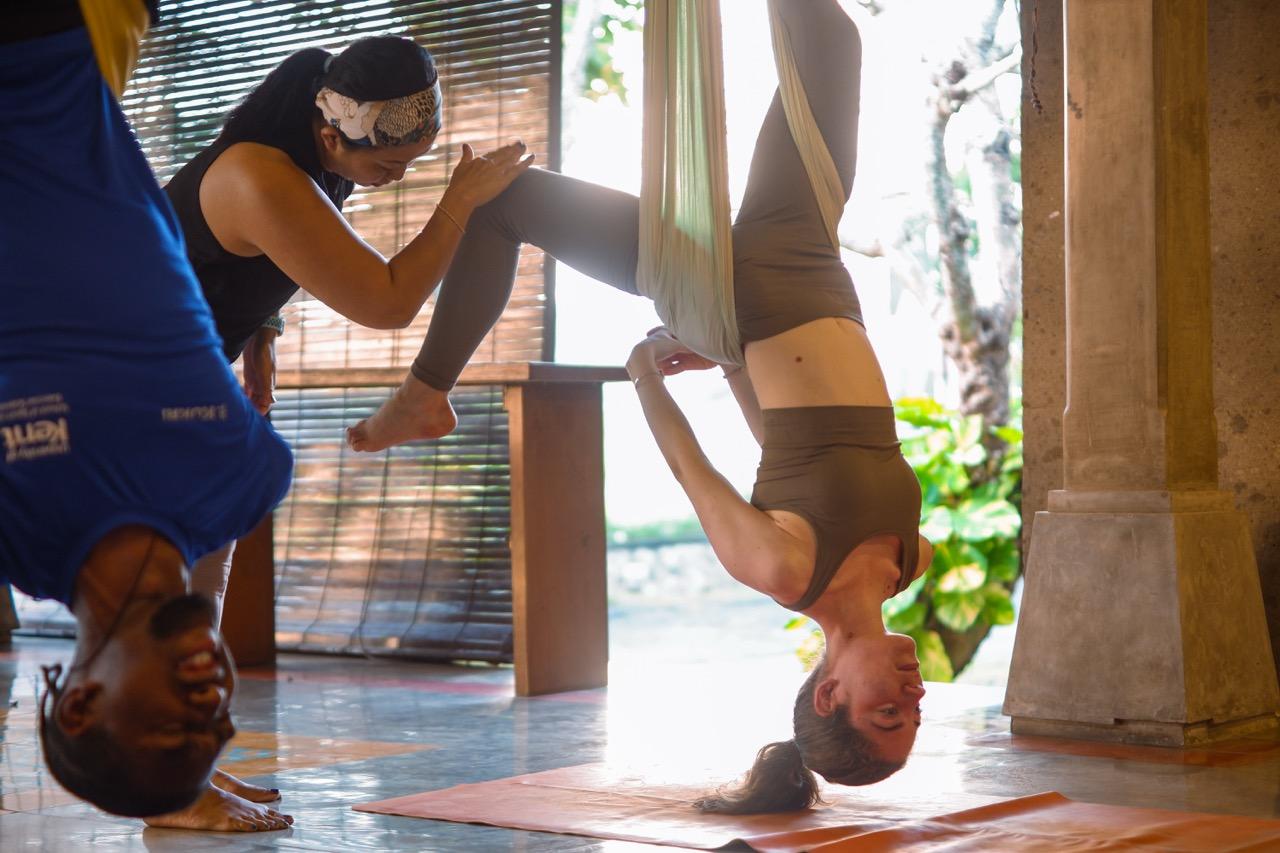
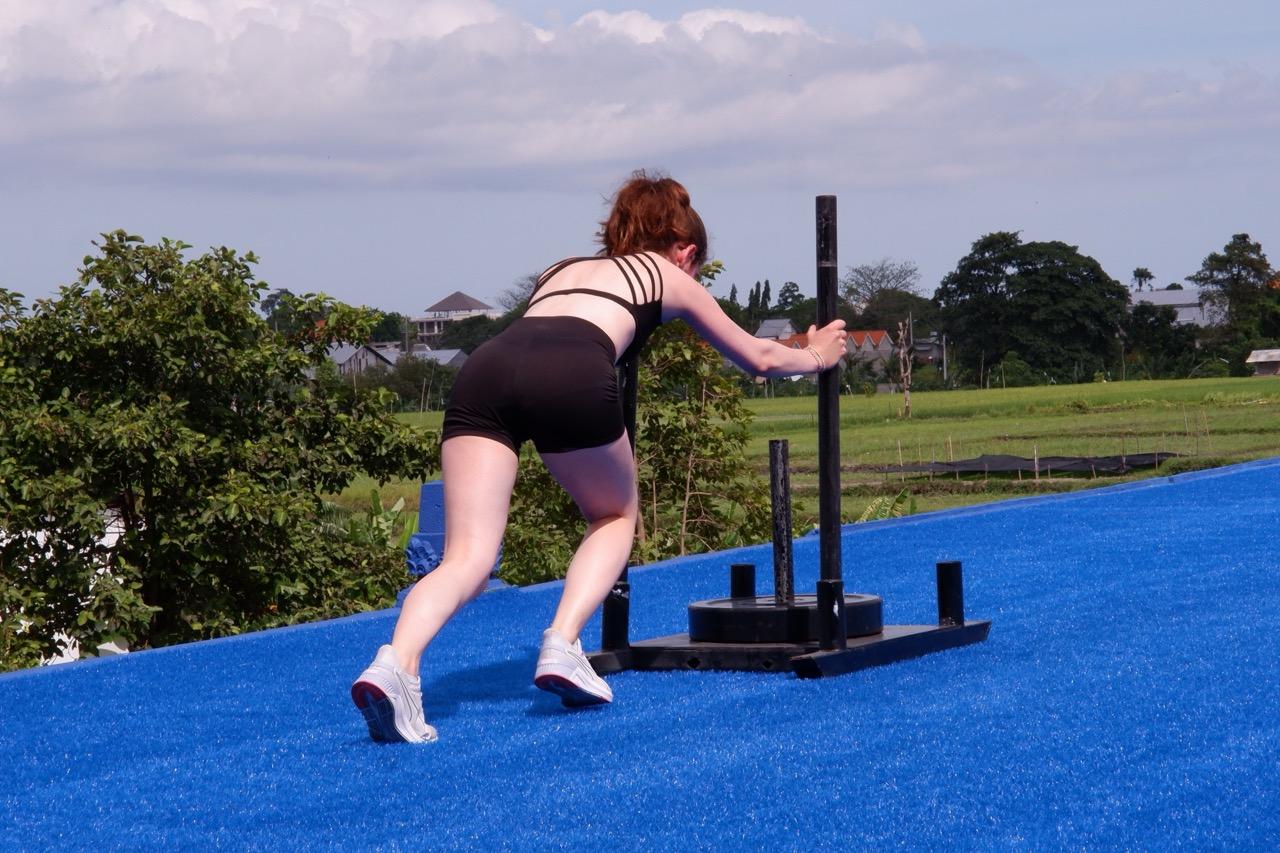
The Sport, Stability & Tradition component brings together contemporary sport science with forms of movement and wellness encountered in Bali. Students explore injury prevention, biomechanics, warm-up and recovery, functional movement, and body awareness while also encountering activities such as Legong movement, yoga, surfing, aerial yoga, cycling, mixed martial arts, SUP yoga, and traditional approaches to recovery and wellness.
For a Sport & Business Management student, this offered a different perspective on an already familiar discipline. Instead of focusing mainly on how sport is organized or managed, the course repeatedly returned attention to the individual experiencing movement: the body, its relationship with the surrounding environment, the risks involved, and the ways different cultures understand balance and well-being.
That cultural dimension is particularly visible through subjects such as Tri Hita Karana, the Balinese philosophy centered on harmony between people, nature, and the spiritual world, and Usada Bali, which introduces students to traditional approaches to medicine and wellness. The program also examines Subak, Bali's community-based irrigation system, as part of understanding how culture, environmental management, agriculture, and community life remain interconnected.
For Emma, these were not simply additions to a sports curriculum. They became part of understanding how the meaning of health, movement, and sustainability can change when viewed within another cultural setting.
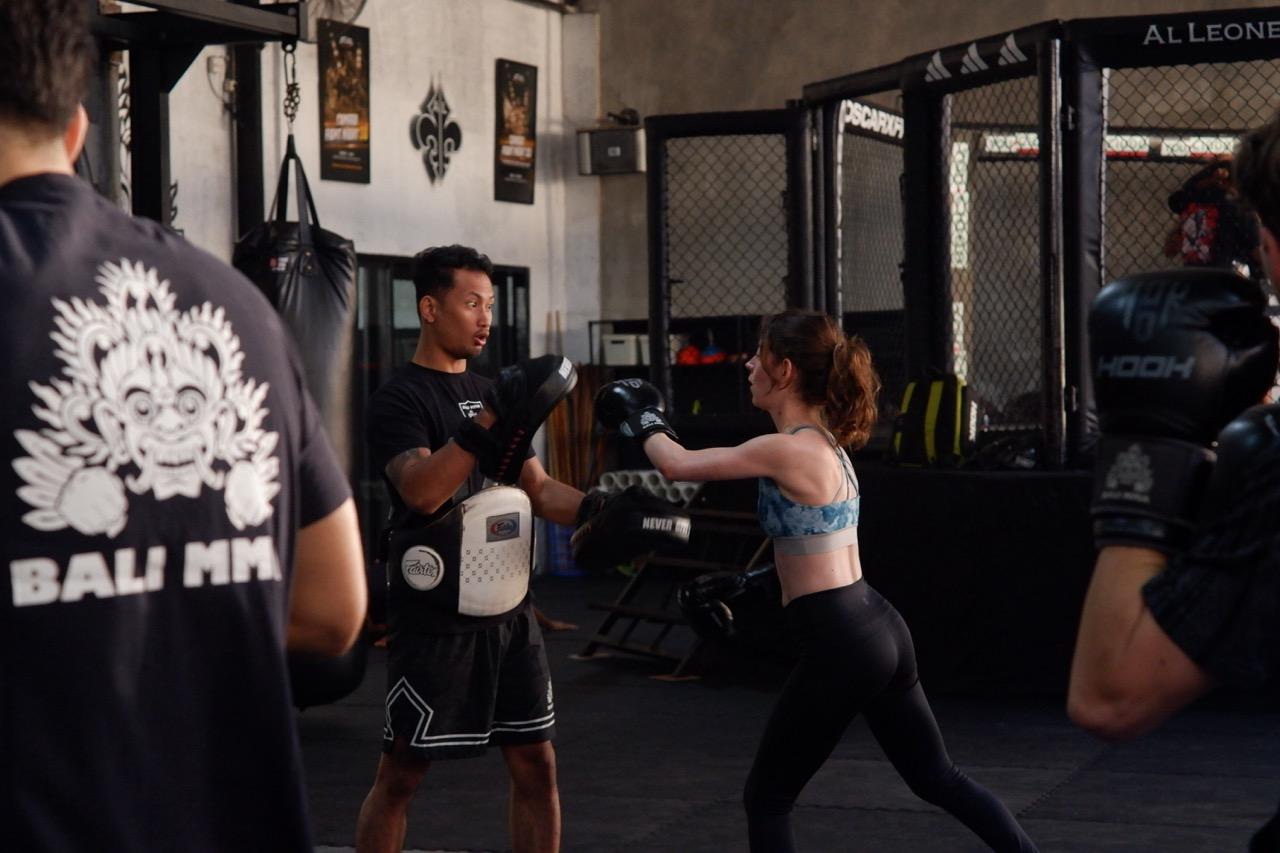
Basic sparring techniques with an instructor at Bali MMA, applying principles of body control, coordination, stability, and movement through a practical introduction to mixed martial arts.
An Academic Program That Rarely Stays in One Place
Emma described student life in Bali as full and sometimes intense. Days began early, traffic could make journeys to campus unpredictable, and lectures were combined with field activities that took students across the island. In her words, the group travelled "from the east to west, from the north to the south," experiencing Bali through both the academic schedule and life outside it.
The course reflects that movement.
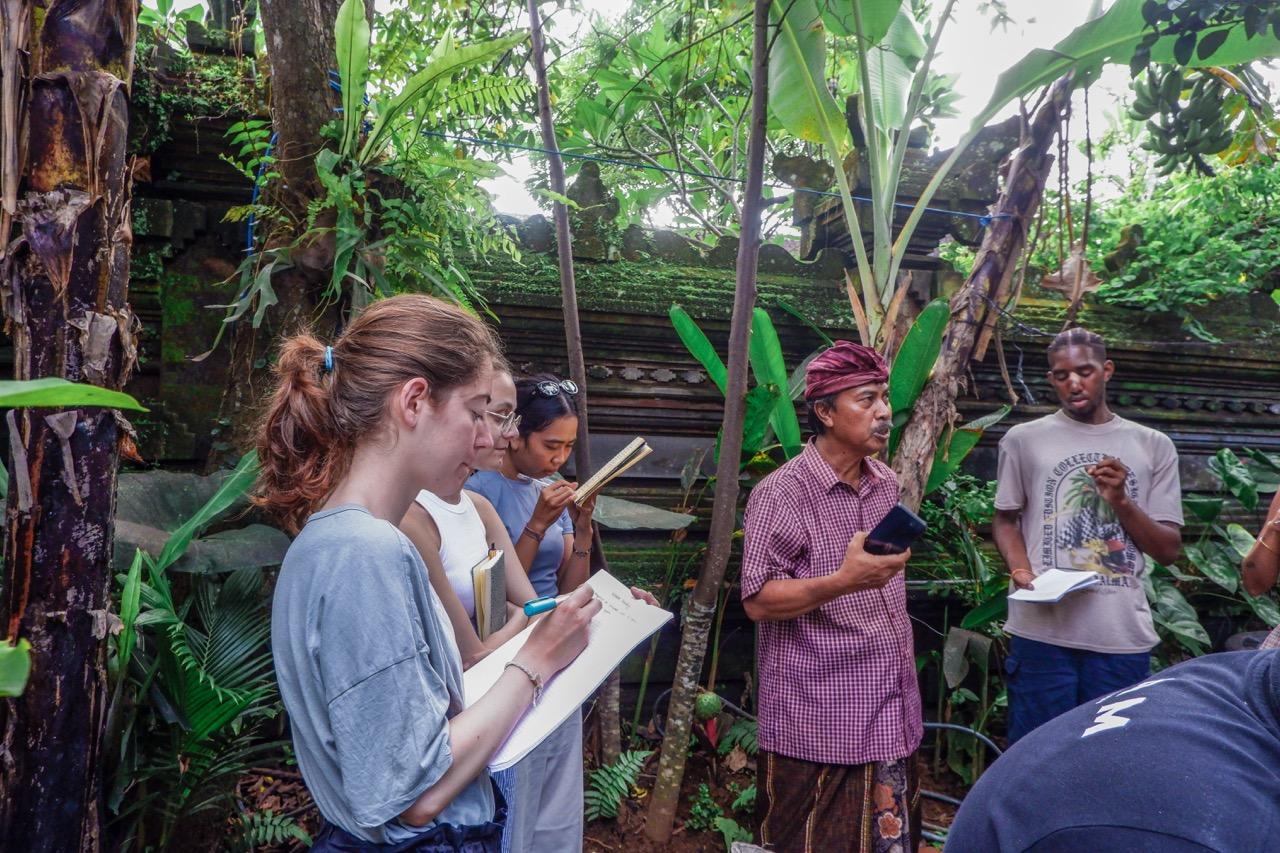
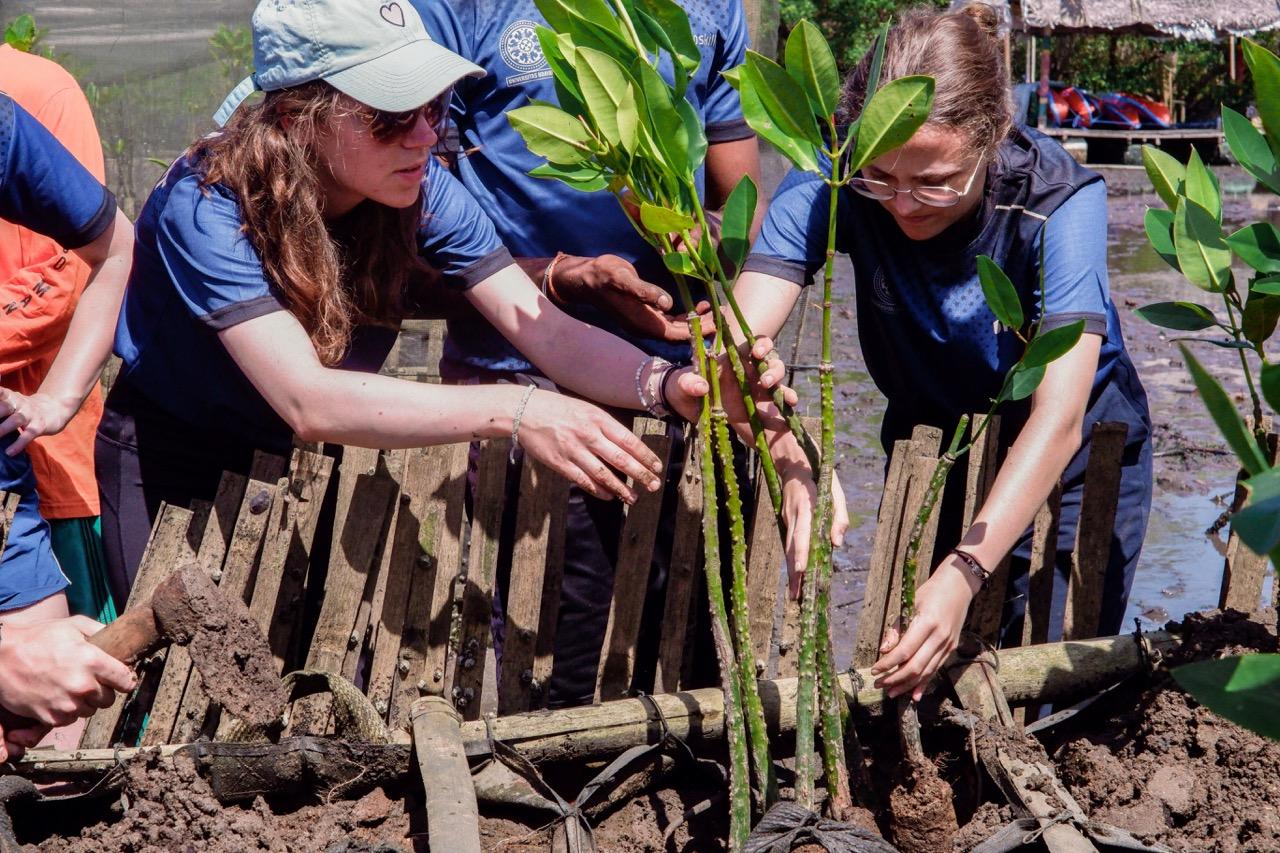
Students undertake coral reef education and scuba diving in Pemuteran, mangrove fieldwork, surfing, stand-up paddleboarding, turtle conservation, lifeguard training, cycling through Jatiluwih, visits to organic agriculture initiatives, physiotherapy sessions, yoga, MMA, and environmental learning in villages and conservation settings.
Among Emma's strongest memories was Lemukih, where trekking, waterfalls, and swimming turned a field day into a physical challenge very different from classroom learning. She also highlighted SUP yoga and scuba diving, particularly because diving required her to confront an activity she initially found intimidating.
These experiences demonstrate one of the program's underlying ideas: understanding sport and environment becomes more meaningful when students physically experience the landscapes and activities they are studying.
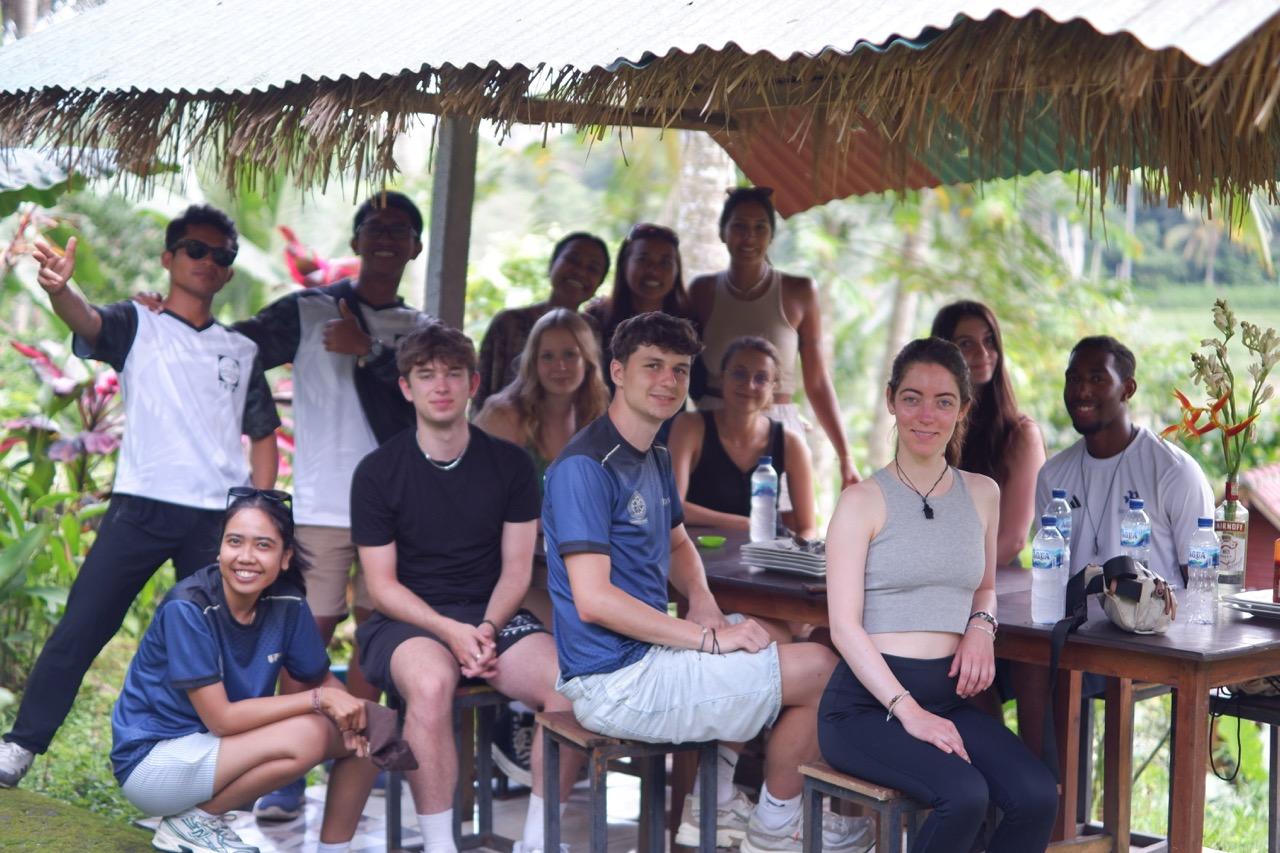
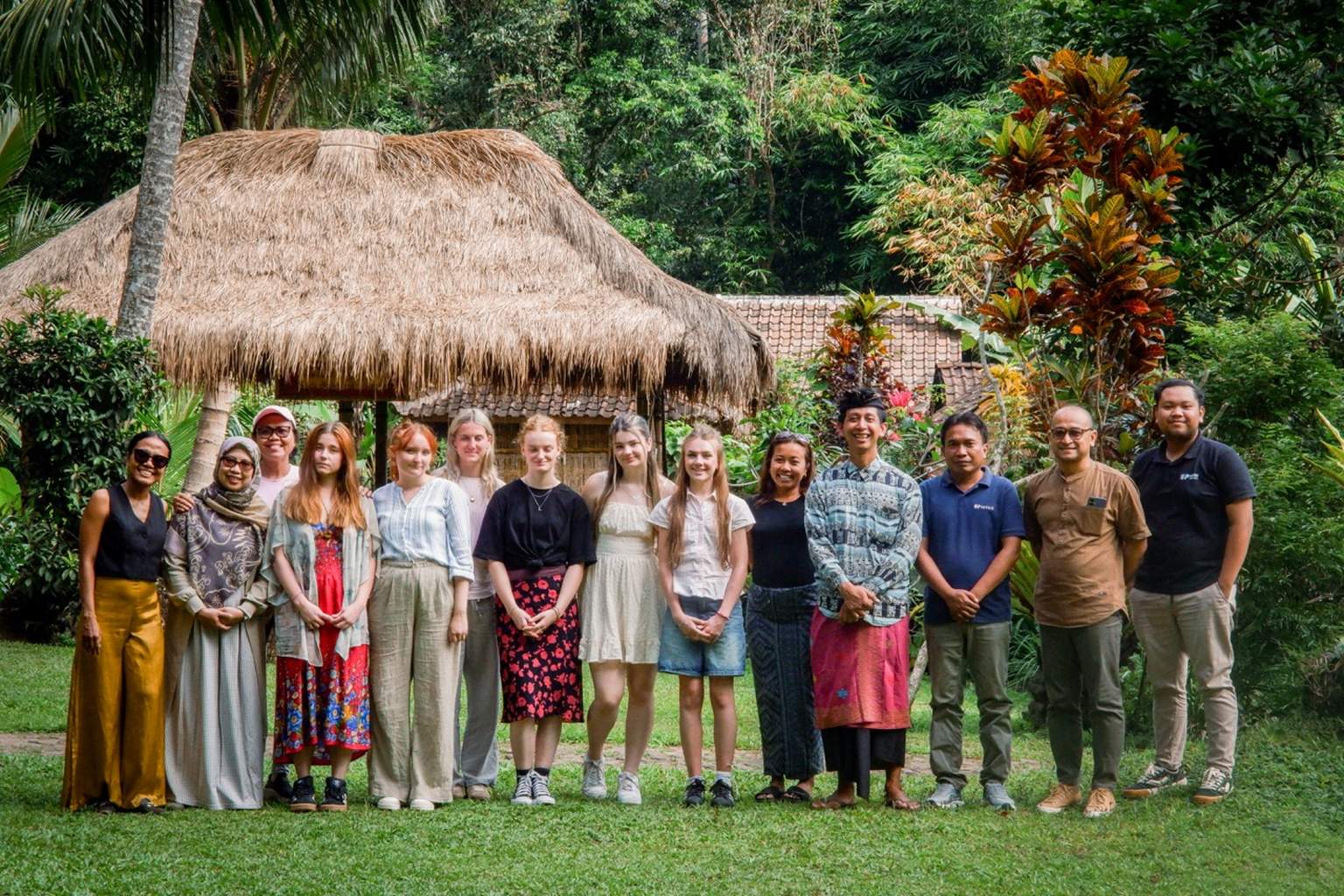
Emma, shares a happy moment with fellow international students, the Upskill team, and local activity partners amid Bali’s rice fields, capturing the friendships and sense of community that developed throughout their four weeks together.
Learning to Live Together
Yet Emma's reflections were not limited to the curriculum. One of the strongest themes in her interview was the experience of living with an international group for four weeks. Students shared accommodation, travelled together, attended classes together, joined field activities, ate together, and gradually learned each other's habits.
She described the first days as slightly overwhelming because so many people had arrived from different places. That changed quickly. Living closely meant learning who needed quiet, who was always ready first, who was hungry, who was late, and how to look after one another while also remaining responsible for yourself. Before long, she described the group as beginning to feel like a family.
This social component may sit outside the formal syllabus, but it forms an important part of studying internationally. Academic mobility asks students to adapt not only to another university system, but also to unfamiliar routines, cultural differences, group dynamics, language, transportation, food, and the practical reality of living away from home.
Emma also spoke about the support she received before arriving, particularly with the practical preparation surrounding documents and the visa process. Knowing that there was someone available to answer questions contributed to her feeling secure about making the journey to Bali.

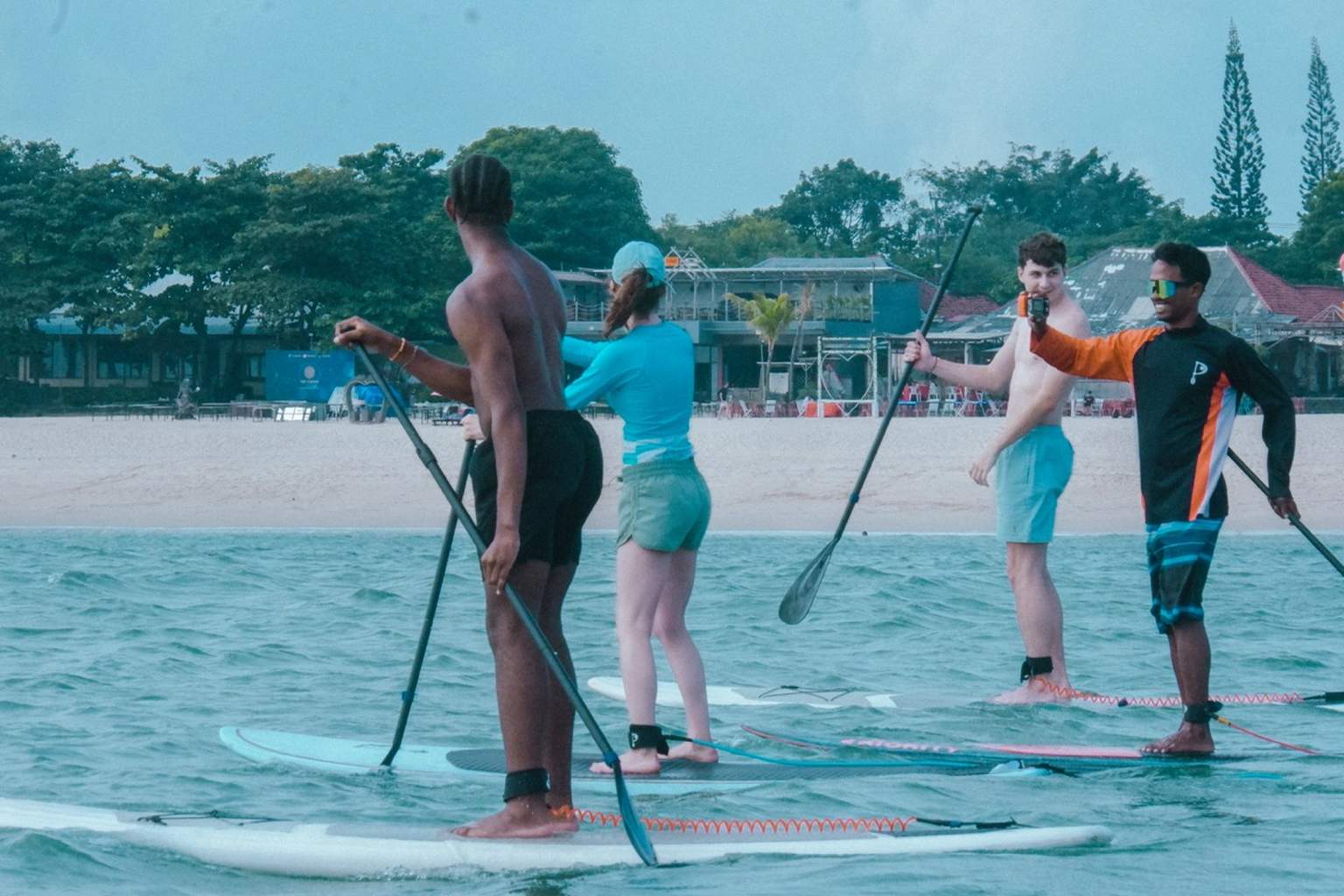
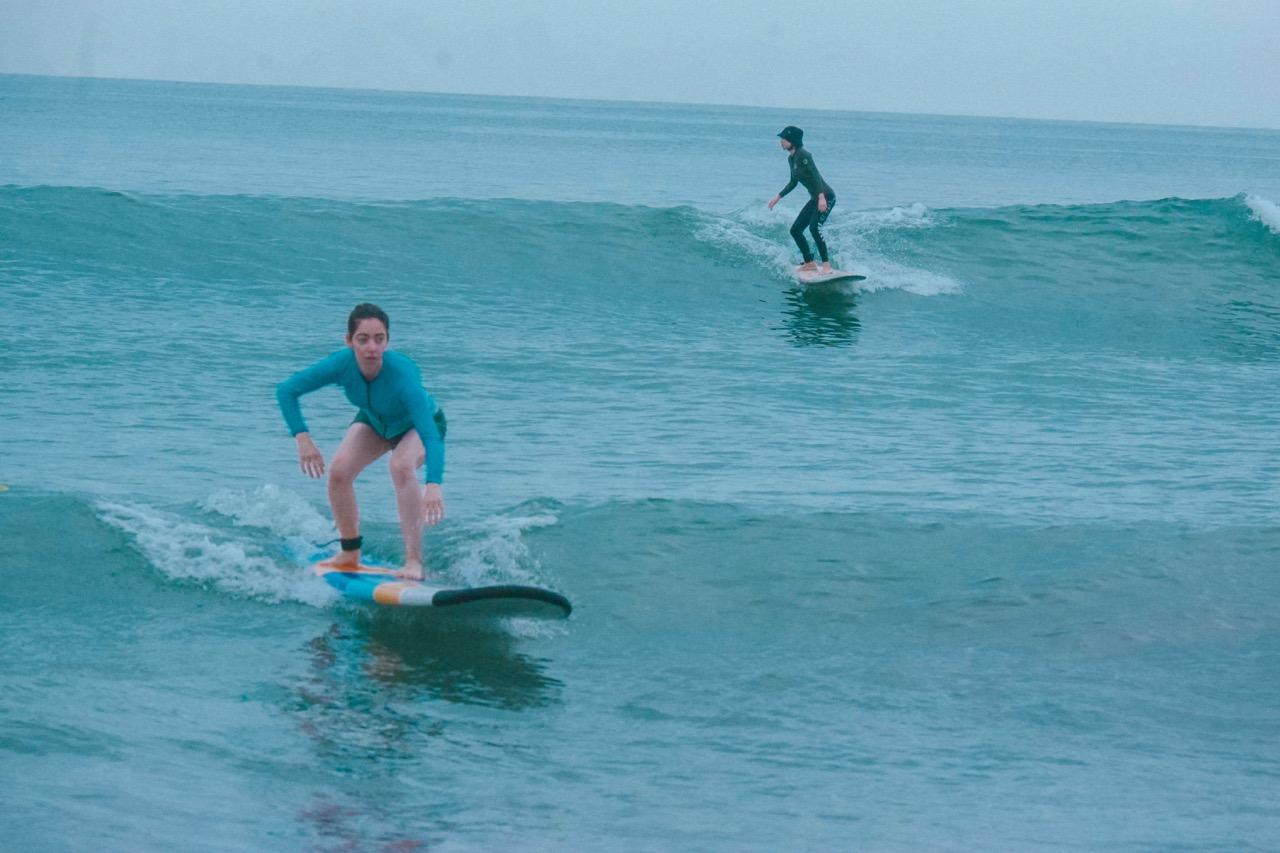
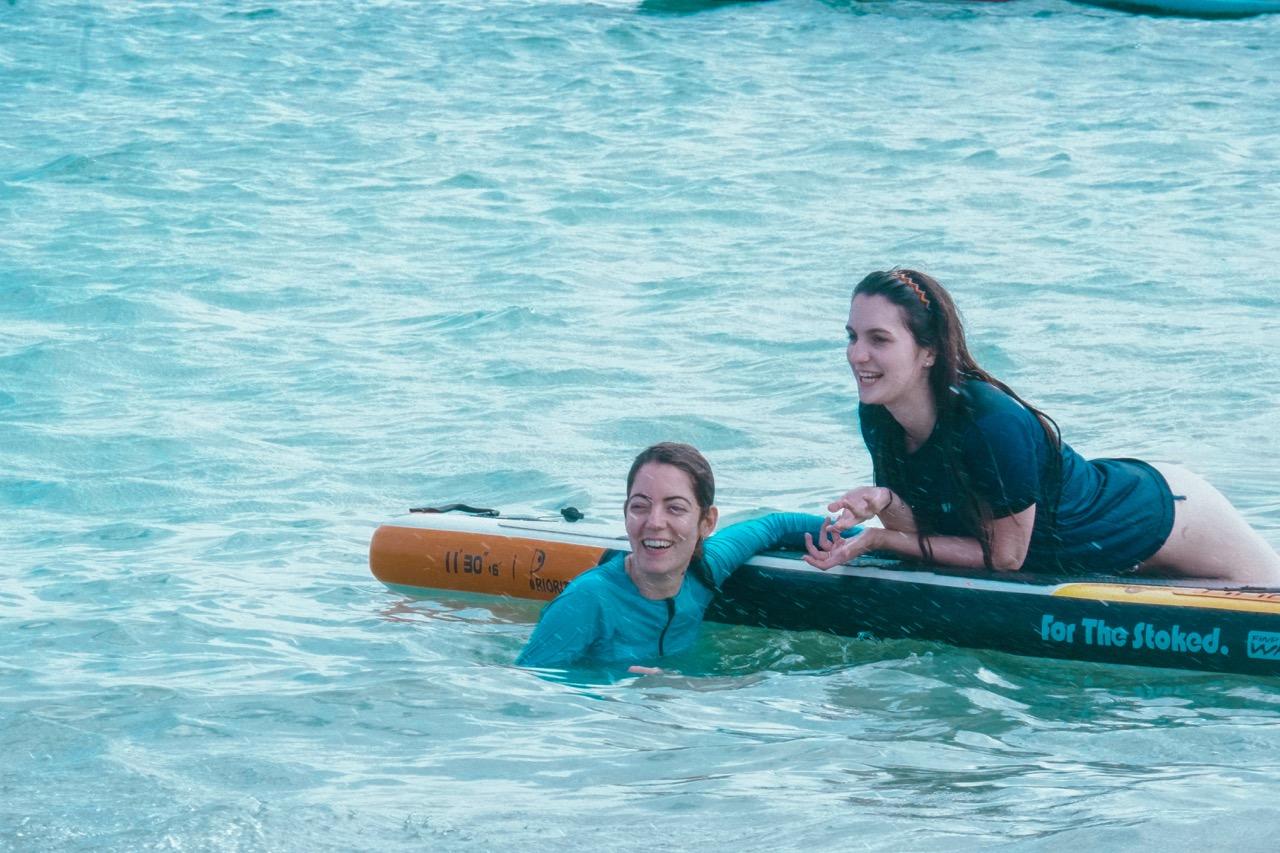
Emma and fellow students with the SUP Priority Bali team after a stand-up paddleboarding session at the beach, a fitting reminder of her biggest personal lesson from studying abroad: learning to embrace the unexpected and, in her own words, “go with the flow.”
Learning to Leave Some Space for the Unexpected
Perhaps the most revealing part of Emma's reflection came when she discussed something she had learned about herself.
She described herself as someone who normally plans everything carefully. In Bali, she discovered that not every day could be controlled in quite the same way. Schedules changed, new people appeared, unfamiliar experiences developed unexpectedly, and she gradually became more comfortable allowing some things to happen without planning every detail in advance.
Her phrase for this was simple: “go with the flow.”
Within the context of international study, that does not mean abandoning organization or academic structure. Rather, it reflects another form of learning: developing enough confidence to respond when circumstances are unfamiliar.
For Emma, the four weeks expanded the meaning of her existing degree. Sport remained central, but it became connected with culture, nature, wellness, environmental responsibility, friendship, and a different way of approaching everyday life.
That is perhaps what makes studying an already familiar subject abroad so valuable. The objective is not necessarily to replace what students learn at their home university.
It is to complicate it, broaden it, and allow them to return home seeing their own discipline from another perspective.
By upskill team