Interview with Molly, an Economic student from Cardiff University
Intercultural Communication Summer Course in Bali: Learned About Culture, Community and Herself
4-5 minutes reading
For Cardiff University student Molly, joining an international summer course in Bali began with uncertainty. Twenty-one days of academic and cultural learning later, she returned home with a different understanding of communication, community, and the opportunities available to her.
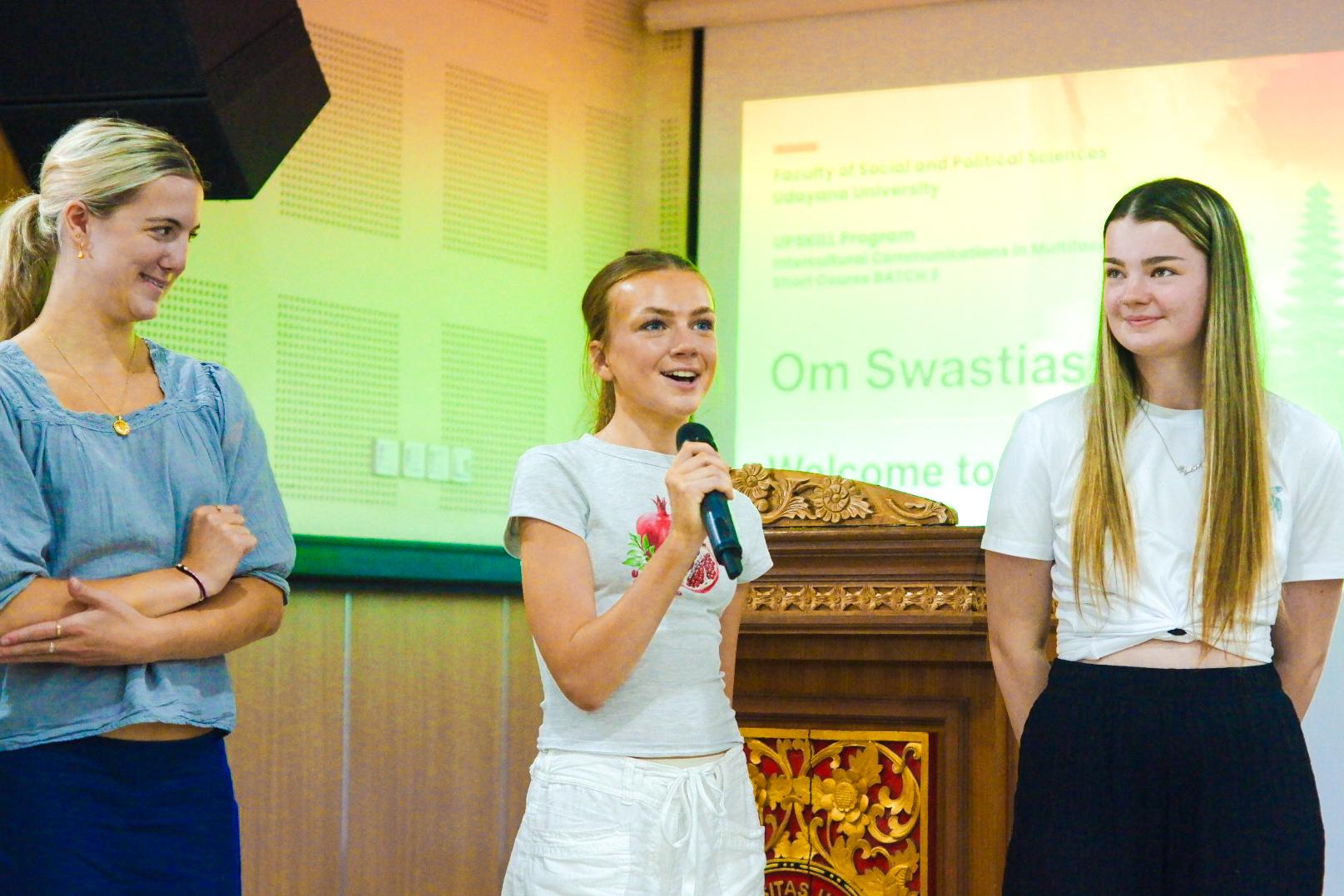
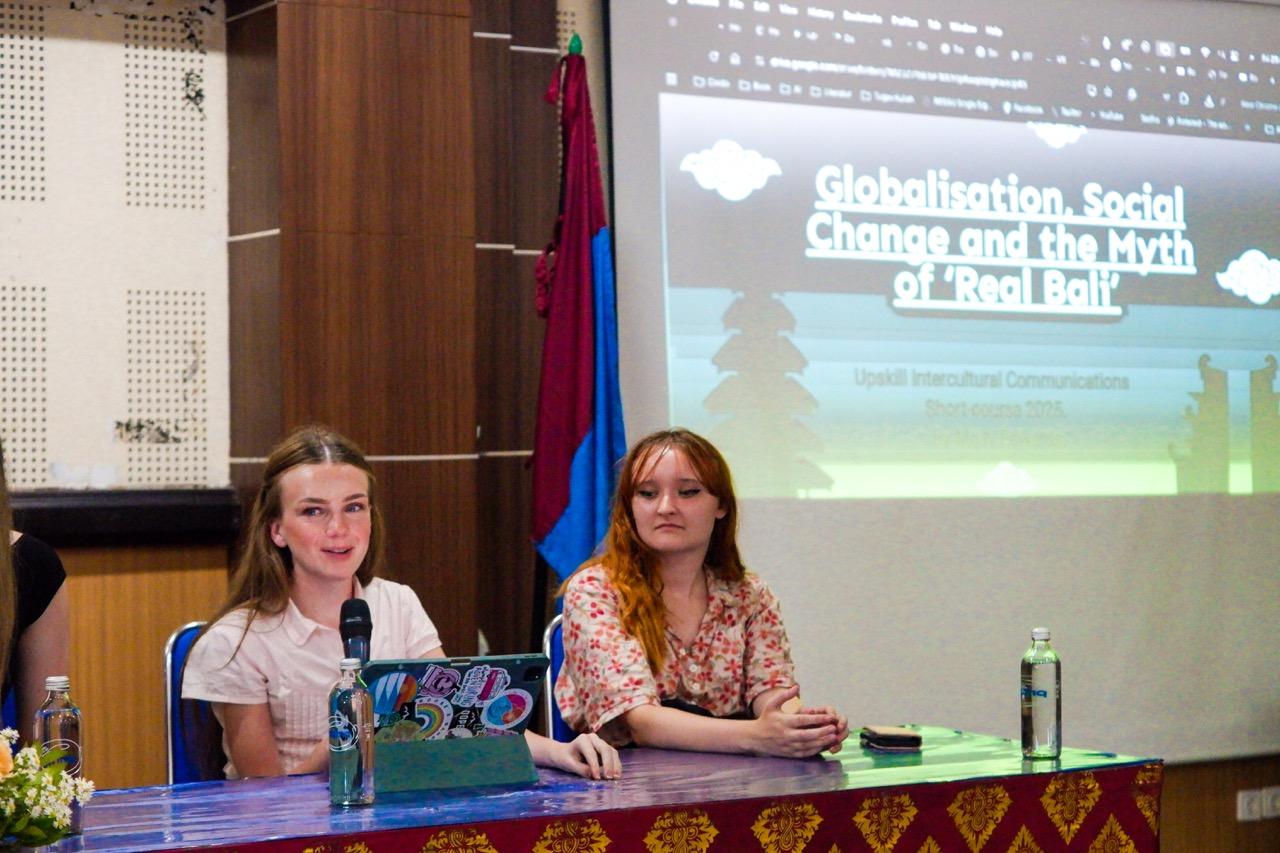
Molly introduces herself alongside fellow Cardiff University students during the summer course welcome ceremony at Udayana University, unaware of the friendships, cultural discoveries, and personal growth that the next four weeks in Bali would bring.
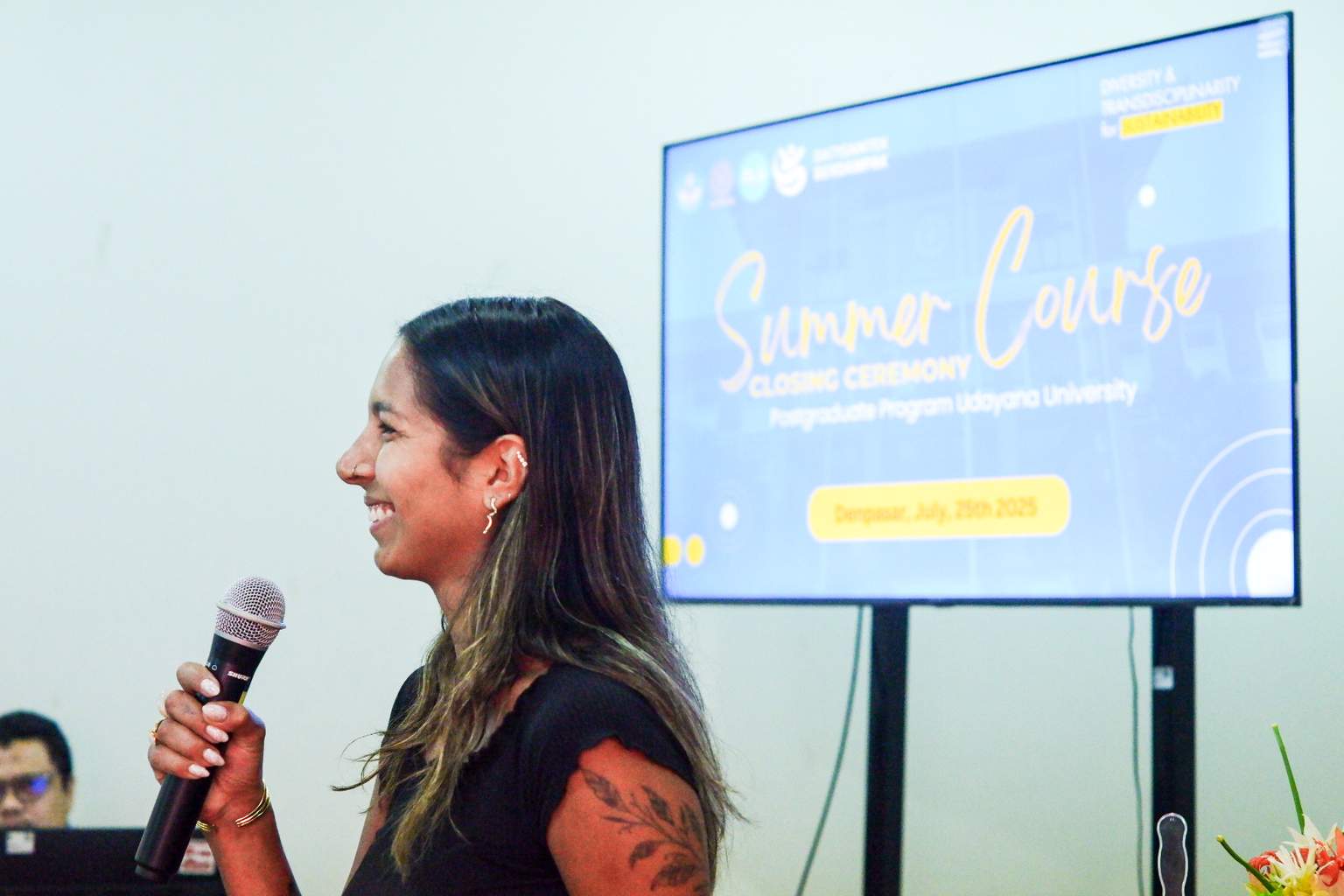
At the closing ceremony of the Intercultural Communication & Multifaceted Globalizations Summer Course at Udayana University, Molly Edwards described her time in Bali as one of the best experiences of her life.
It was a significant reflection from a student who had arrived only weeks earlier feeling uncertain about almost everything: the people she would meet, the academic environment, the language, the food, and the unfamiliarity of living so far from home. In her final interview with the Upskill Study Program, she expressed it simply: "It's the best thing I've ever done."
For Molly, a 20-year-old Economics student at Cardiff Business School in the United Kingdom, studying in Bali was not an obvious extension of her university routine. It was a deliberate decision to experience another country, another academic environment, and another way of understanding the world. And as she discovered, studying intercultural communication is considerably more demanding and more personal when you become part of the cultural encounters you are learning to examine.
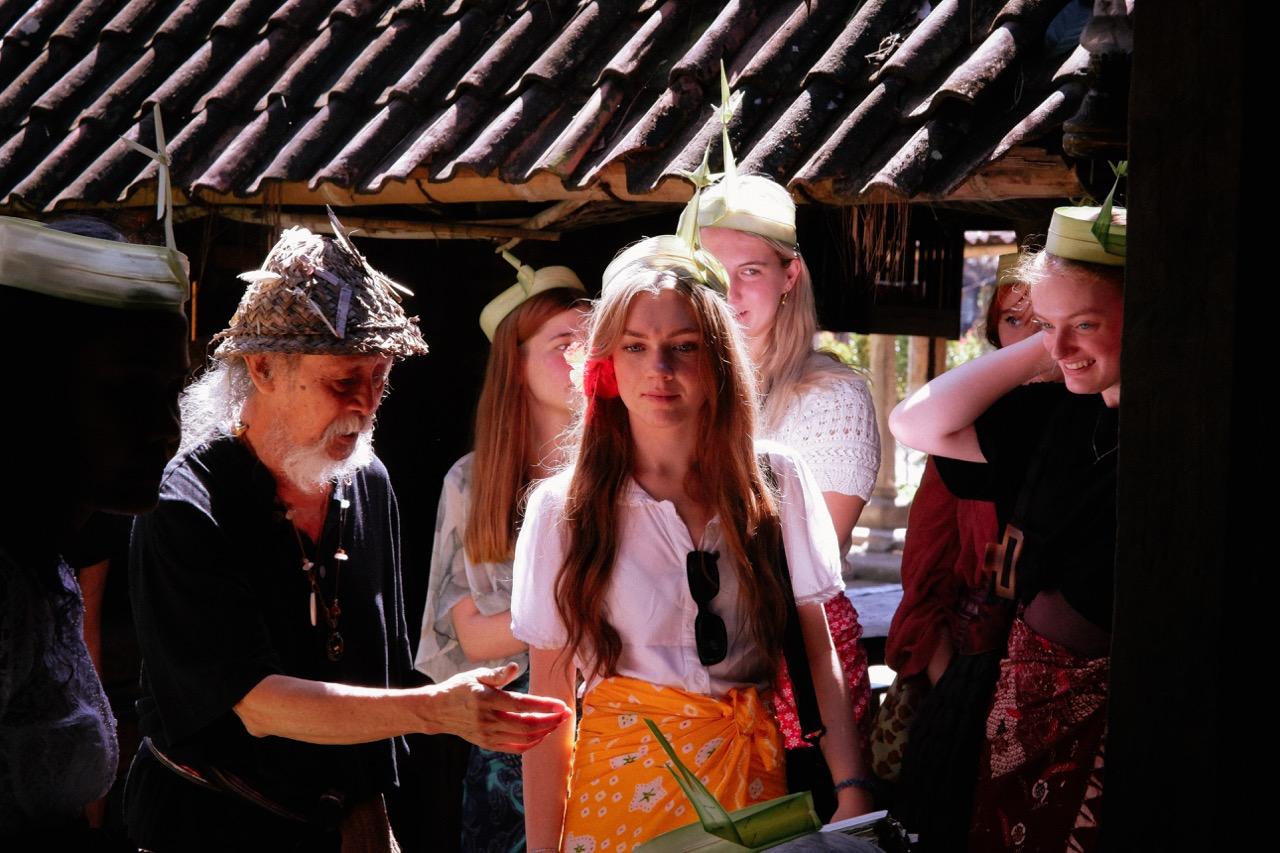
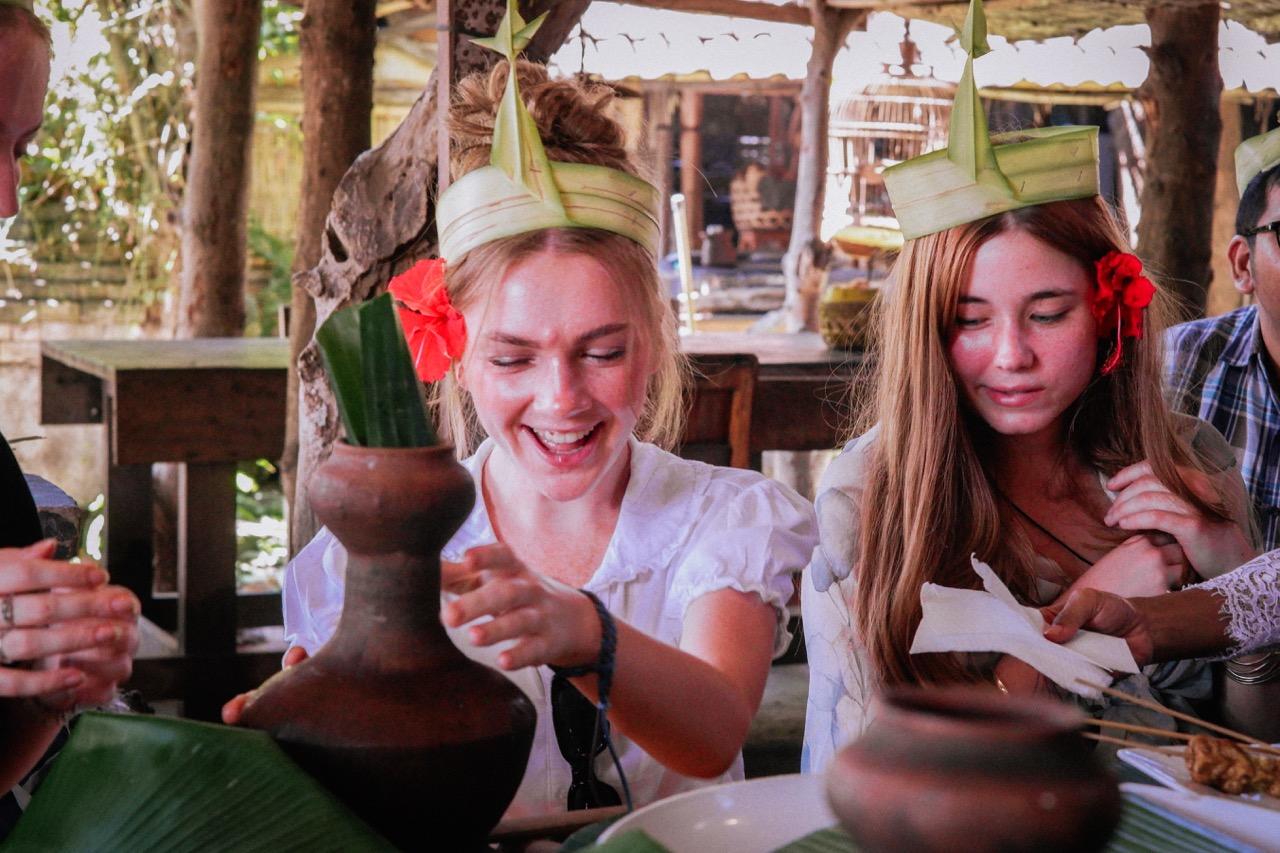
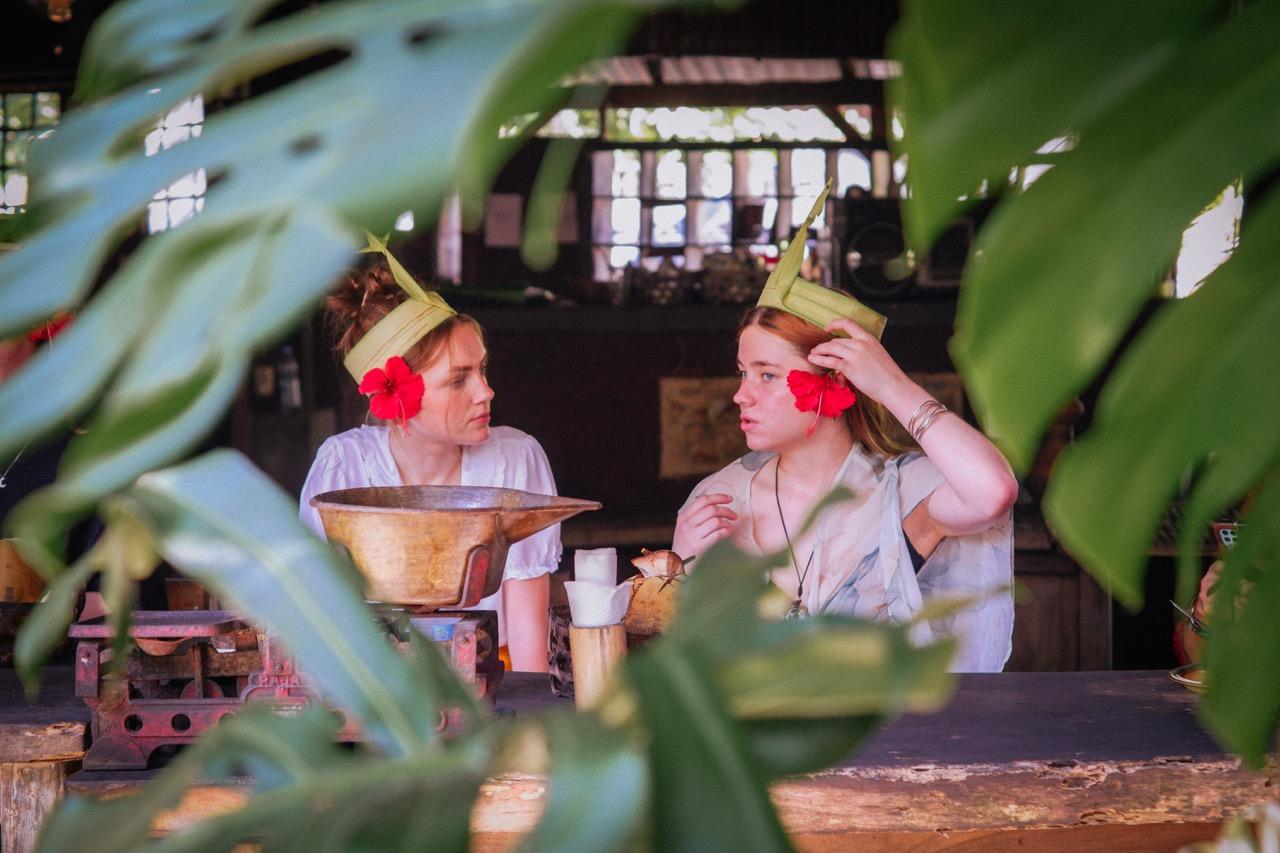
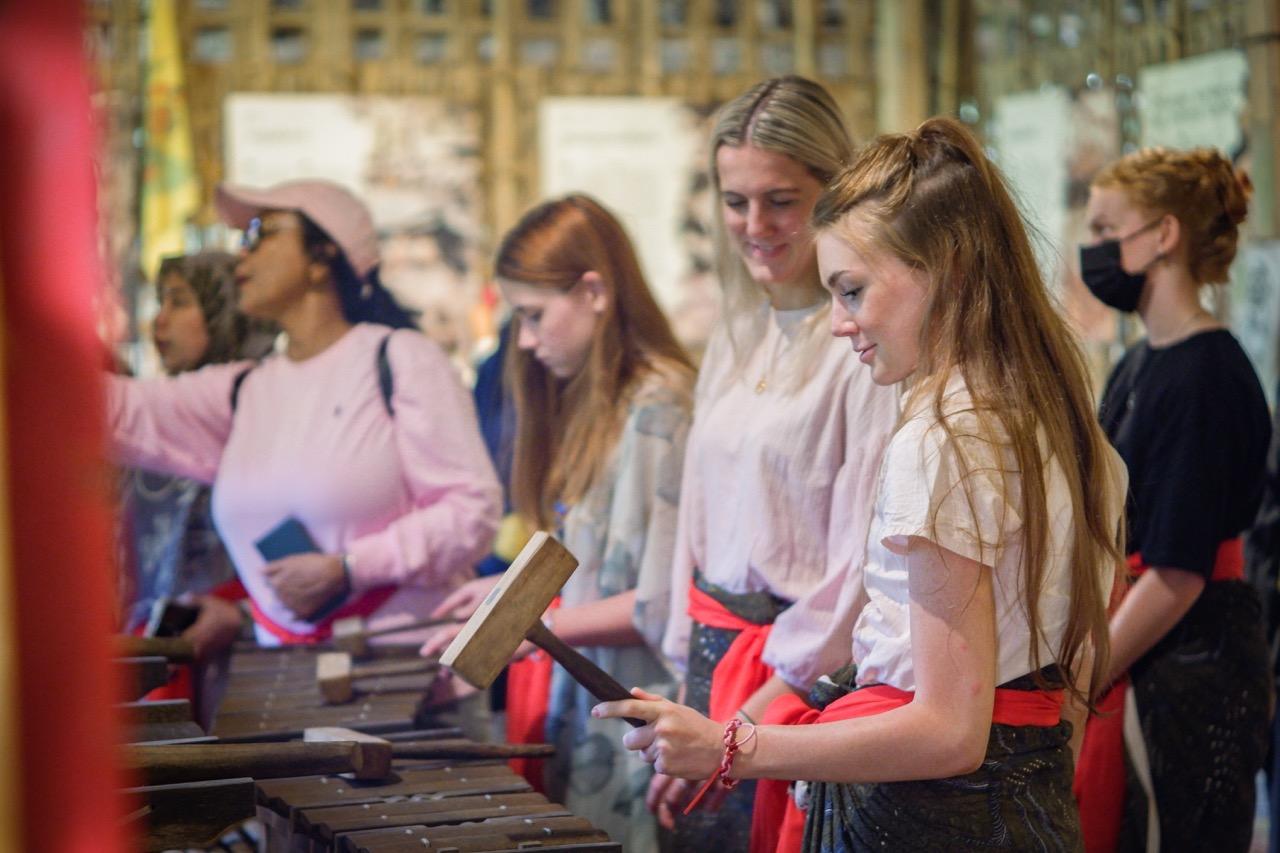
Molly and fellow students experience Balinese slow-food traditions with Kak Tekor, practicing megibung, a communal dining tradition that explores the cultural significance of shared spaces, togetherness, and social connections.
Why an Economics Student Chose to Study Intercultural Communication in Bali
Economics is concerned with more than markets, numbers, and financial decisions. It also examines how people, institutions, and societies make choices, distribute resources, and respond to change. For students interested in international business, development, or global economic relations, cultural understanding is therefore not an optional addition to their education. It shapes the way people communicate, cooperate, negotiate, and interpret one another's behavior. This was part of Molly's original motivation for applying to Upskill's Intercultural Communication & Multifaceted Globalizations Summer Course in Bali.
In her application, she expressed an interest in exploring how cultural perspectives influence global markets, trade relations, and development strategies. She also wanted to challenge herself by entering an unfamiliar social and academic environment.
During her interview on her last day in the summer course, she returned to that initial decision.
"I decided to join the program because I just wanted an opportunity to do something different and to put myself out there and to challenge myself to new experiences." She was curious about traditions, perspectives, and ways of living that she would not ordinarily encounter while studying in Cardiff. The decision, however, came with considerable apprehension. Molly was traveling to a country where she knew very little about what daily life would be like, and she did not know the students who would be joining her. Still, she submitted her application.
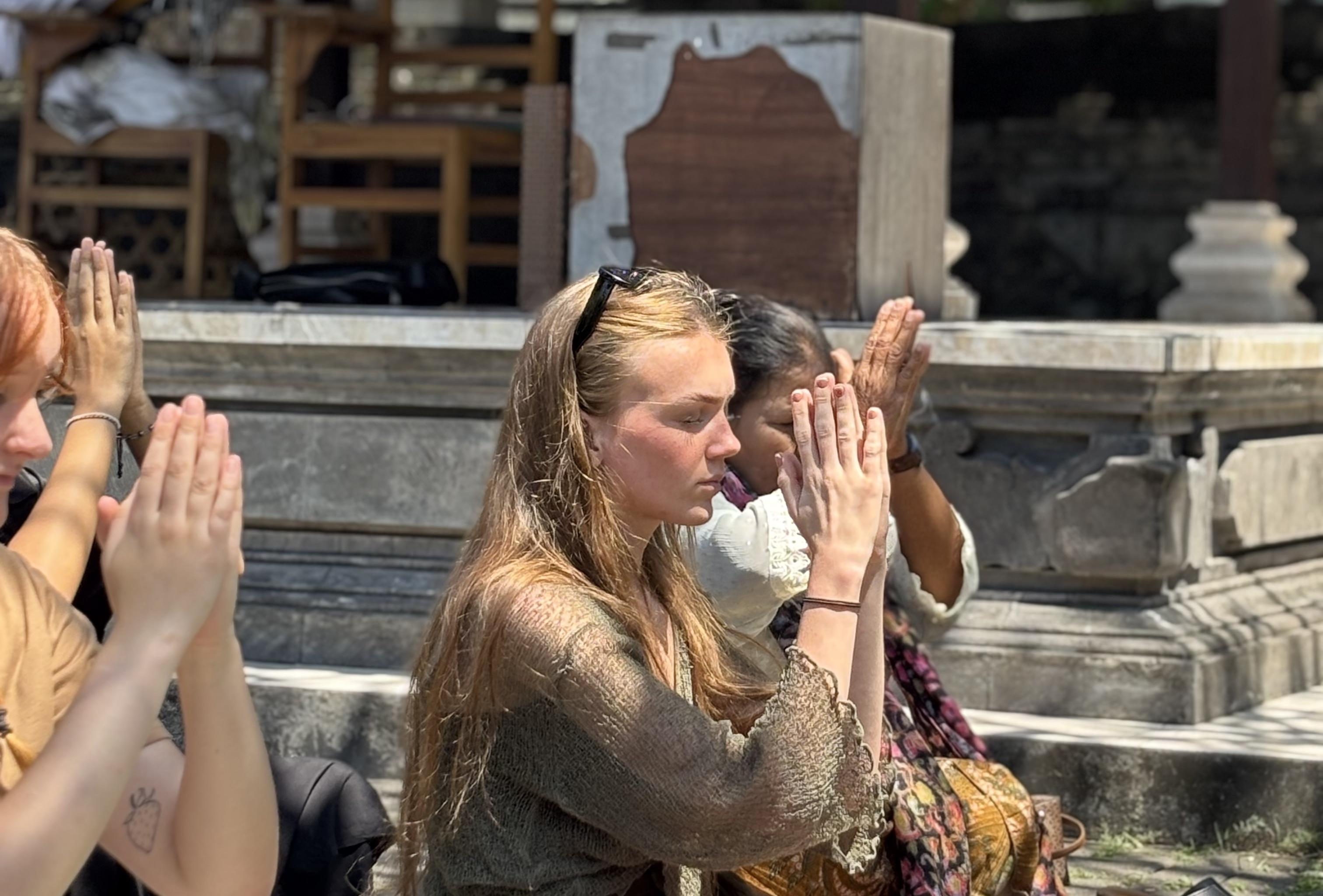
Molly and fellow students experience a moment of gratitude and reflection at a Balinese temple, exploring different cultural perspectives while connecting traditional practices with personal awareness and self-discovery.
Studying Culture Through People, Places and Everyday Life
The Intercultural Communication & Multifaceted Globalizations Summer Course, delivered by Upskill Study Program in collaboration with The Faculty of Politics and Social Sciences (FISIP) Udayana University in Bali, examines how culture shapes communication, social relationships, identity, and the ways societies respond to globalization.
Throughout the program, students move between academic discussions and direct encounters with Balinese cultural practices, institutions, and communities. Classroom subjects such as cultural relativism, cultural identity, social change, and globalization are examined alongside field visits, conversations with Indonesian students and local experts, and participation in cultural learning activities.
These encounters are important because intercultural communication cannot be fully understood as a collection of definitions or theories. It also involves recognizing one's own assumptions, interpreting unfamiliar behavior without immediately judging it, and learning how to communicate when people do not share the same cultural references. For Molly, this connection between academic material and direct experience became one of the most meaningful aspects of the course.
"I'm so glad I took the leap and I signed up for it," she reflected.
She explained that studying concepts in class and subsequently encountering them in everyday life allowed her to understand perspectives she would not otherwise have experienced. When asked what she could learn in Bali that would be difficult to learn at home, she struggled to identify just one example. There had been too many. What stood out, however, was the importance of meeting people, speaking with them, and experiencing cultural differences personally rather than only reading about them. It was precisely this combination of structured academic learning and human interaction that made the experience valuable.
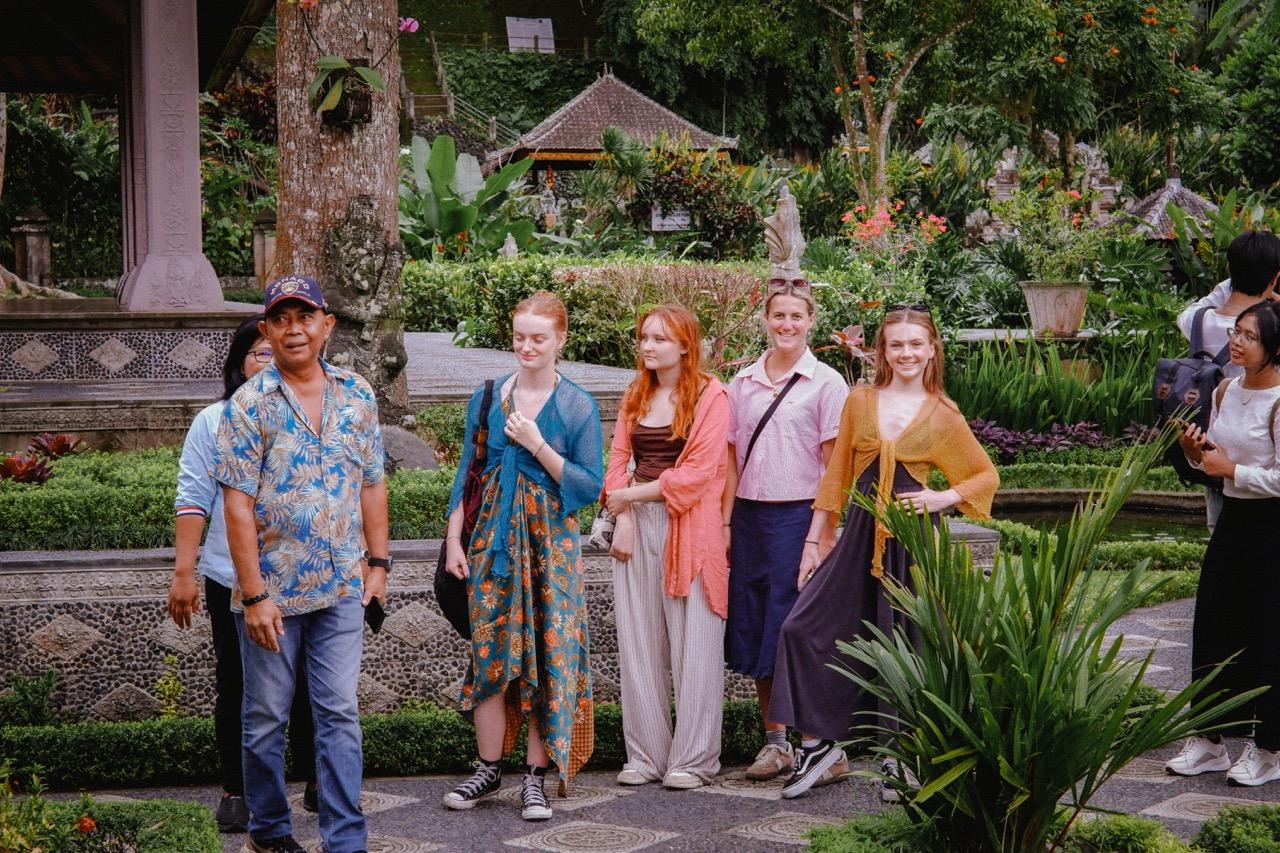
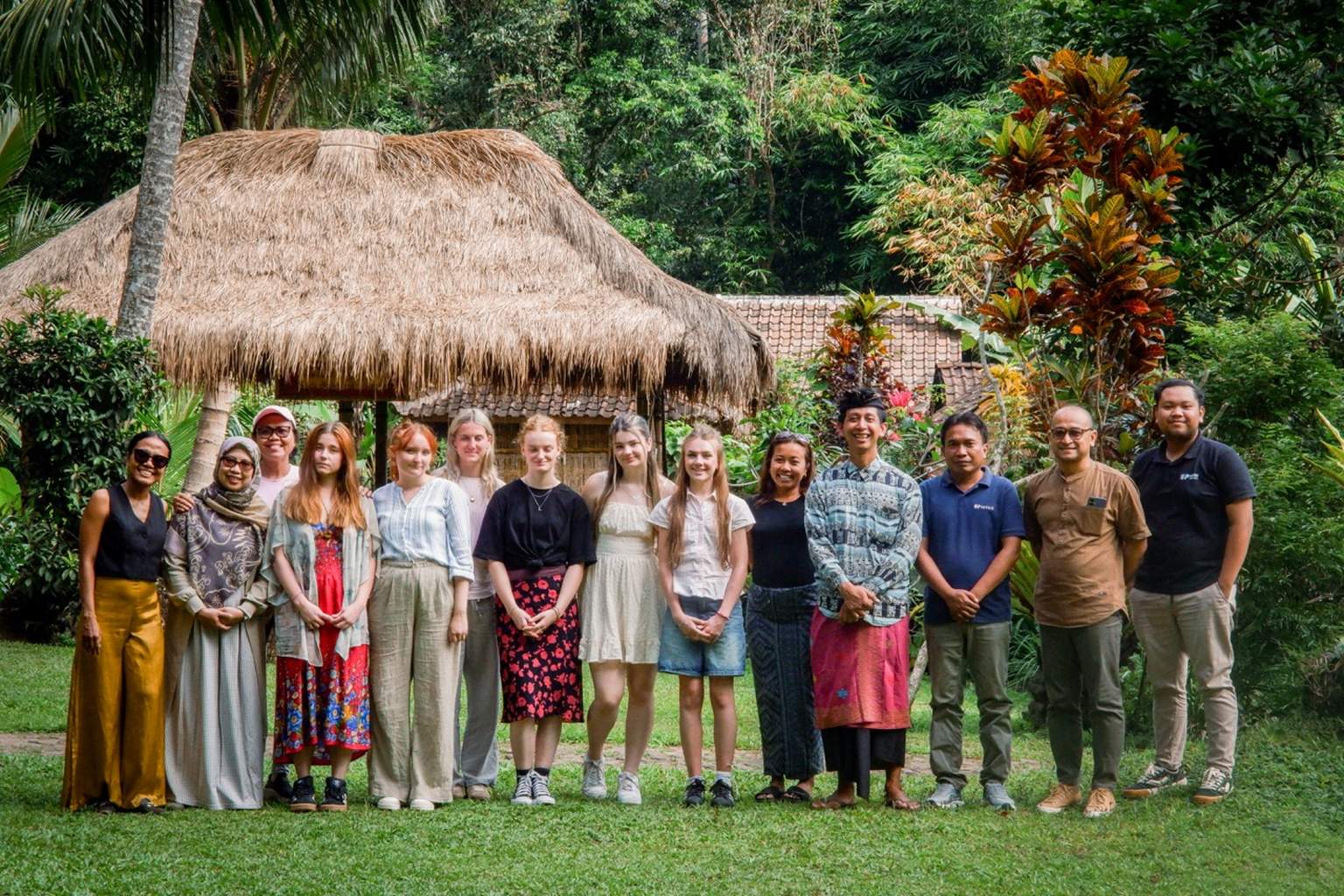
Molly and fellow students with Mr. Kosalia, a descendant of Bali’s Puri royal family, during their cultural field visit to Tirta Gangga in East Bali, a place Molly later remembered for its remarkable sense of peace, stillness, and connection to Balinese heritage.
A Quiet Moment at Tirta Gangga
Not all meaningful learning experiences announce themselves through formal lectures or structured discussions. When Molly was asked to identify her favorite field visit, she chose Tirta Gangga, the historic royal water gardens in Karangasem, East Bali.
Rather than describing the architecture or the scenery alone, she remembered how she felt while spending time there. She recalled sitting on a bench, listening to the sound of flowing water and music, and watching fish swimming through the pools. She felt a sense of peace and belonging and could have remained there for hours.
The visit also introduced her to the history of the site and its connection with Bali's royal heritage. Her reflection illustrates an important aspect of cultural education: places are not simply attractions to be visited. They carry historical, social, and cultural meanings that become clearer when students are encouraged to observe, listen, ask questions, and reflect.
For Molly, Tirta Gangga became one of the places where a different cultural environment offered an opportunity to slow down and think.
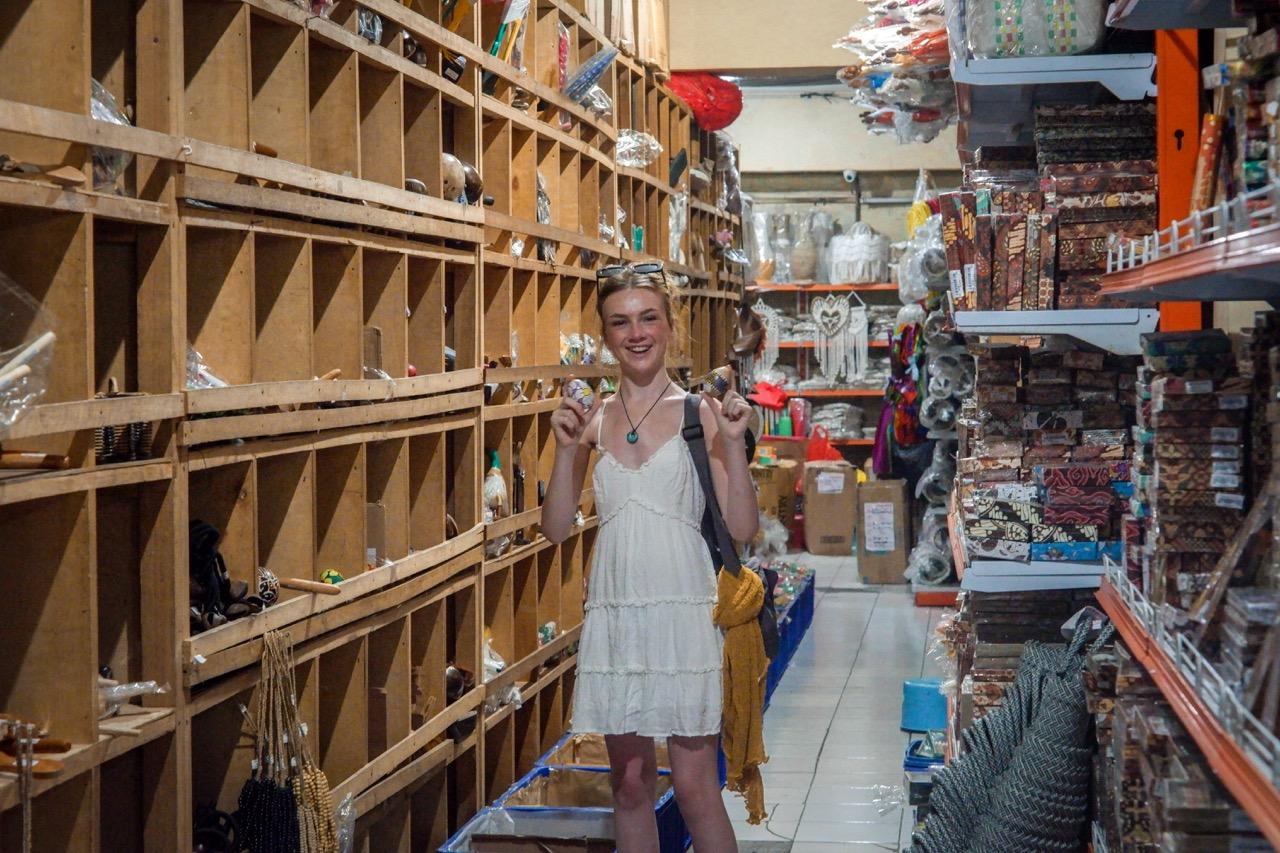
A beaming Molly during a student field assignment at Pasar Badung, Bali’s traditional market, capturing a moment of growing confidence and curiosity as she embraces unfamiliar surroundings, cultural encounters, and new experiences far from home.
From an Uncertain Arrival to Finding Her Place
Perhaps the most revealing part of Molly's interview was her account of arriving in Bali. She spoke openly about how nervous she had been before the program began. The uncertainty extended to almost every aspect of daily life, including the course itself, her fellow students, language differences, and unfamiliar food.
On her arrival, she even called her mother and questioned whether she could manage the experience. Yet the situation began to change almost immediately after she met the other students.
Sharing accommodation, attending university together, participating in field activities, and navigating everyday life helped unfamiliar faces become friends. Molly spoke about how much the support of her fellow students, lecturers, and people she met in Bali contributed to her confidence. She described forming friendships she expected to maintain long after returning to the United Kingdom.
This social dimension of international education deserves attention. Learning to live and work with people from different backgrounds requires more than friendliness. It involves patience, adaptability, communication, and an ability to recognize that other people may approach ordinary situations differently.
For students entering increasingly international professional environments, these are important competencies. They cannot be developed through academic reading alone. Molly's experience demonstrated how quickly an unfamiliar environment can become more manageable when people are willing to communicate, support one another, and participate in shared experiences.
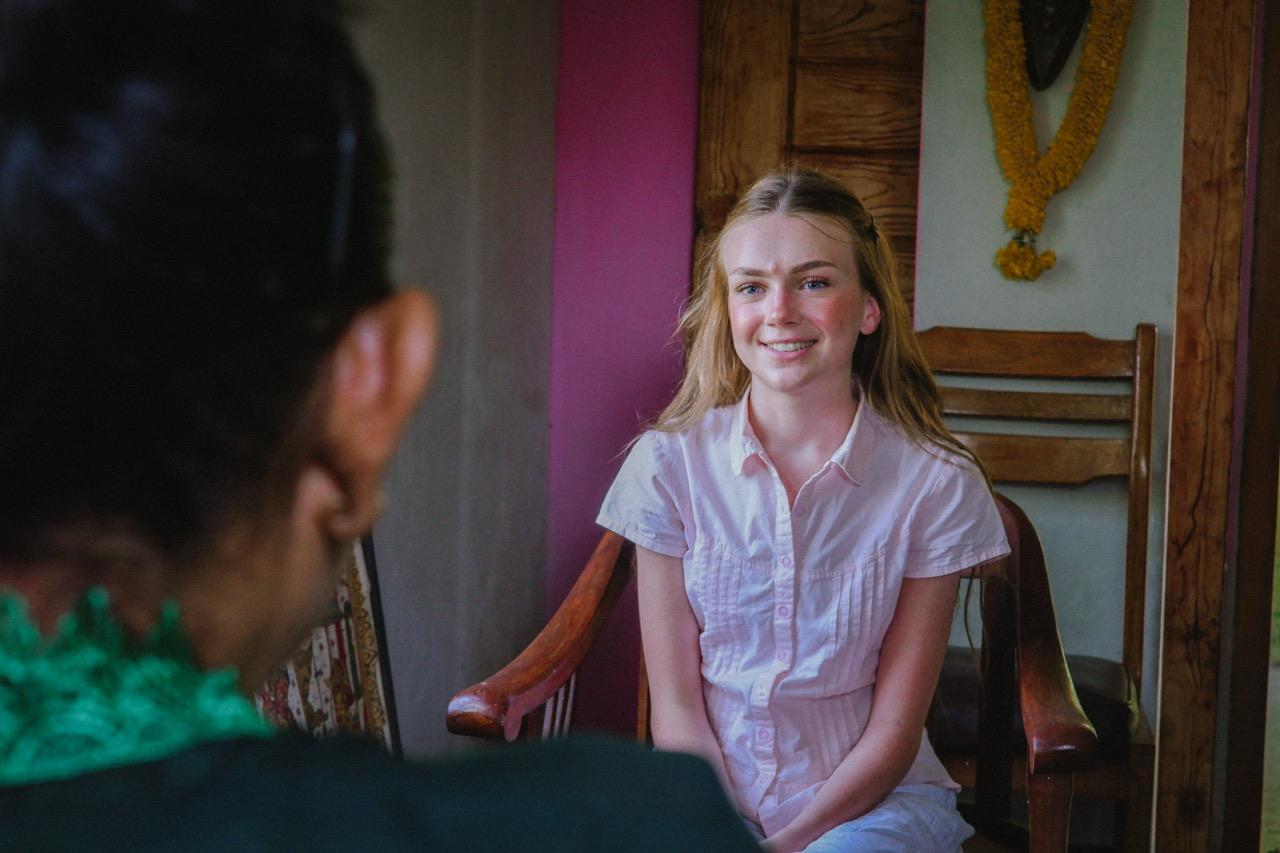
Molly shares a warm smile with her lecturer during a discussion on Balinese culture and traditions, reflecting the openness and curiosity that shaped her understanding of community, cultural differences, and new perspectives throughout her time in Bali.
A Different Perspective on Community and Opportunity
As Molly reflected on the cultural differences she encountered in Bali, she repeatedly returned to the importance of community. She observed what she perceived as a stronger emphasis on shared responsibility, social relationships, and taking time to appreciate everyday life. Comparing this with her experiences in the United Kingdom, she became more conscious of how individualism, community expectations, and cultural attitudes can influence everyday behavior.
Her advice to future students was to approach these differences with openness rather than resistance. "Accept the difference, accept the change and try not to fight it." These observations also connect directly with the intellectual purpose of intercultural communication. Cultural differences are not necessarily problems to be solved. They can offer alternative ways of understanding relationships, responsibility, cooperation, and social life.
For an Economics student, such questions extend naturally into the study of international development, business, and global institutions. Molly also reflected on how her experience had changed the way she considered her future.
Before traveling to Bali, her career expectations had largely centered on opportunities close to the town where she grew up. After studying abroad, she began considering a much wider geographical range of possibilities. In her interview, she spoke about realizing that there was "a whole world out there," with opportunities to work and build a career internationally. The course did not provide her with a predetermined career path. Instead, it encouraged her to reconsider the boundaries she had previously placed around her ambitions.
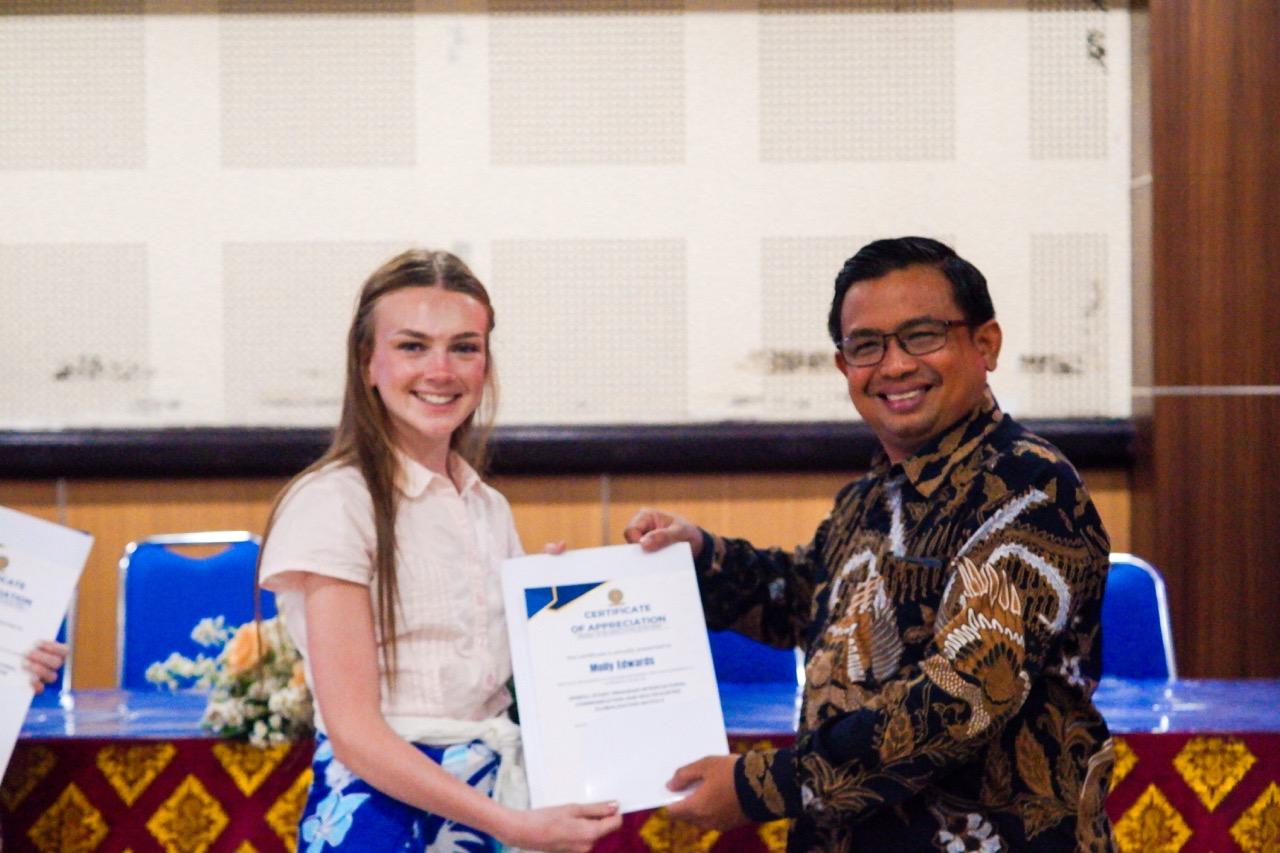
Molly receives her certificate of participation from a Udayana University committee representative during the closing ceremony of the Intercultural Communication Summer Course in Bali, marking the completion of her academic and cultural learning experience.
What Twenty-One Days of International Study Can Mean
An international summer course cannot replace a university degree, nor can several weeks in another country provide a complete understanding of its culture.
What it can offer is a concentrated period of academic learning, cultural encounters, independent thinking, and personal responsibility that challenges students to reconsider familiar perspectives. For Molly, the experience combined intellectually engaging subjects with the practical demands of adapting to a new environment. She had to navigate cultural differences, communicate with unfamiliar people, participate in academic discussions, and gradually develop confidence in situations that initially felt daunting.
Her reflections were filled with appreciation for the people she met, the places she visited, and the opportunities she had given herself by deciding to participate. At the end of the program, she described her experience in three words: beauty, hopeful, and gratitude.
But perhaps her most important reflection came when she acknowledged something she rarely would have considered before leaving home: she was grateful to herself for having the courage to apply. That is a meaningful outcome of international education. Not because every student will experience the same changes, but because studying in another country can create the conditions for students to discover new interests, question assumptions, and consider possibilities they had not previously imagined. For Molly, the Intercultural Communication Summer Course in Bali was an academic opportunity that became much more personal. And for other students considering whether to study abroad, her experience offers a thoughtful reminder: sometimes the decision to learn something new begins with being willing to enter a place where you do not yet know what to expect.
By upskill team